
Last updated September 22, 2026
Level 1 sweep and inspection to the NFPA 211 annual standard - flue, crown, cap, and flashing checked and photographed
Chimney sweep logs do not sweep chimneys. They loosen some creosote - which then falls where a brush and vacuum still have to collect it.
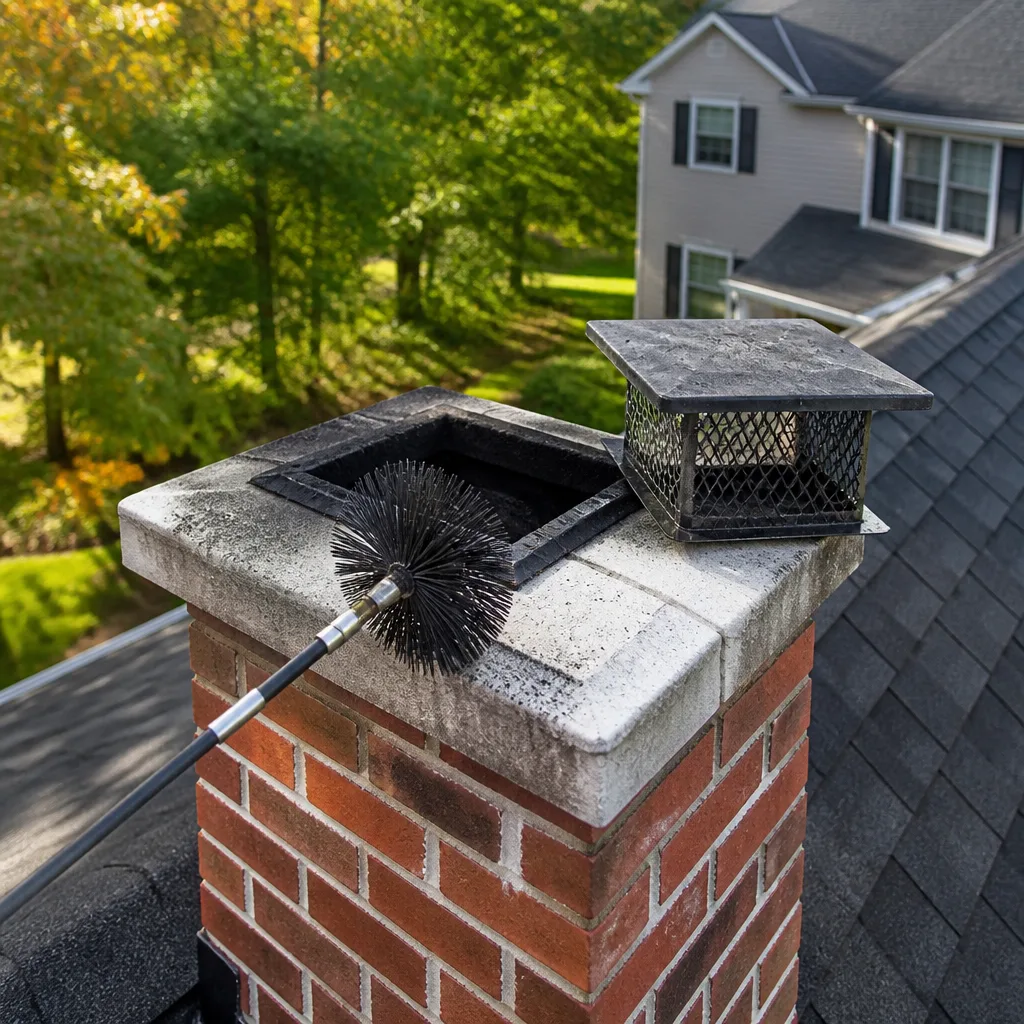
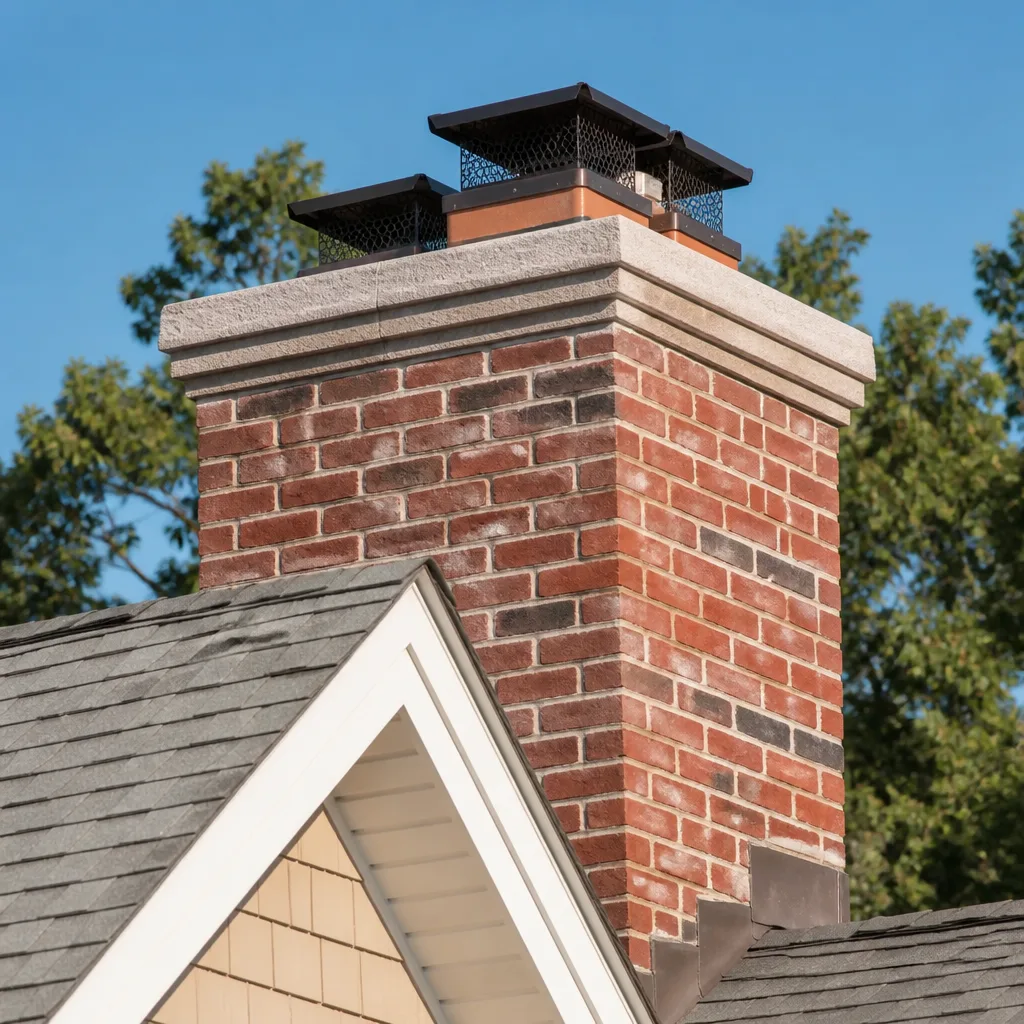
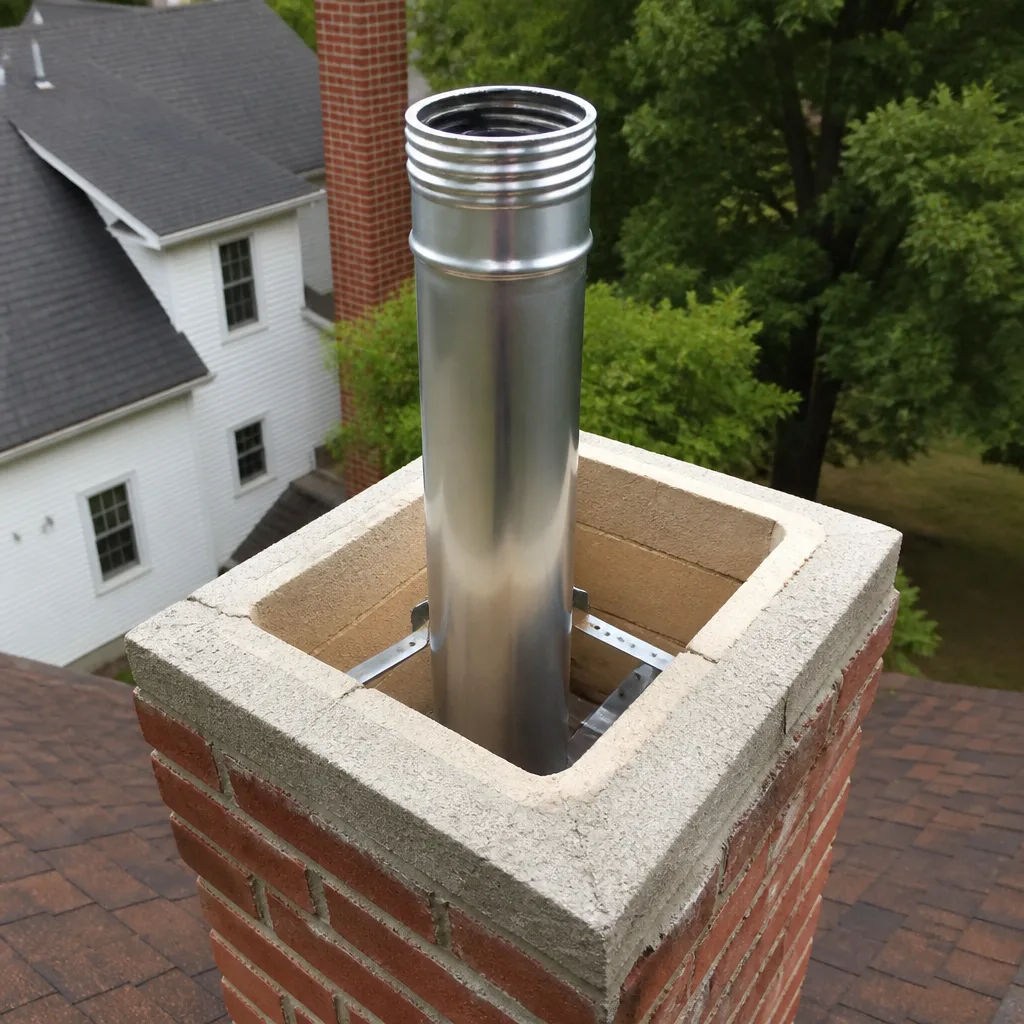
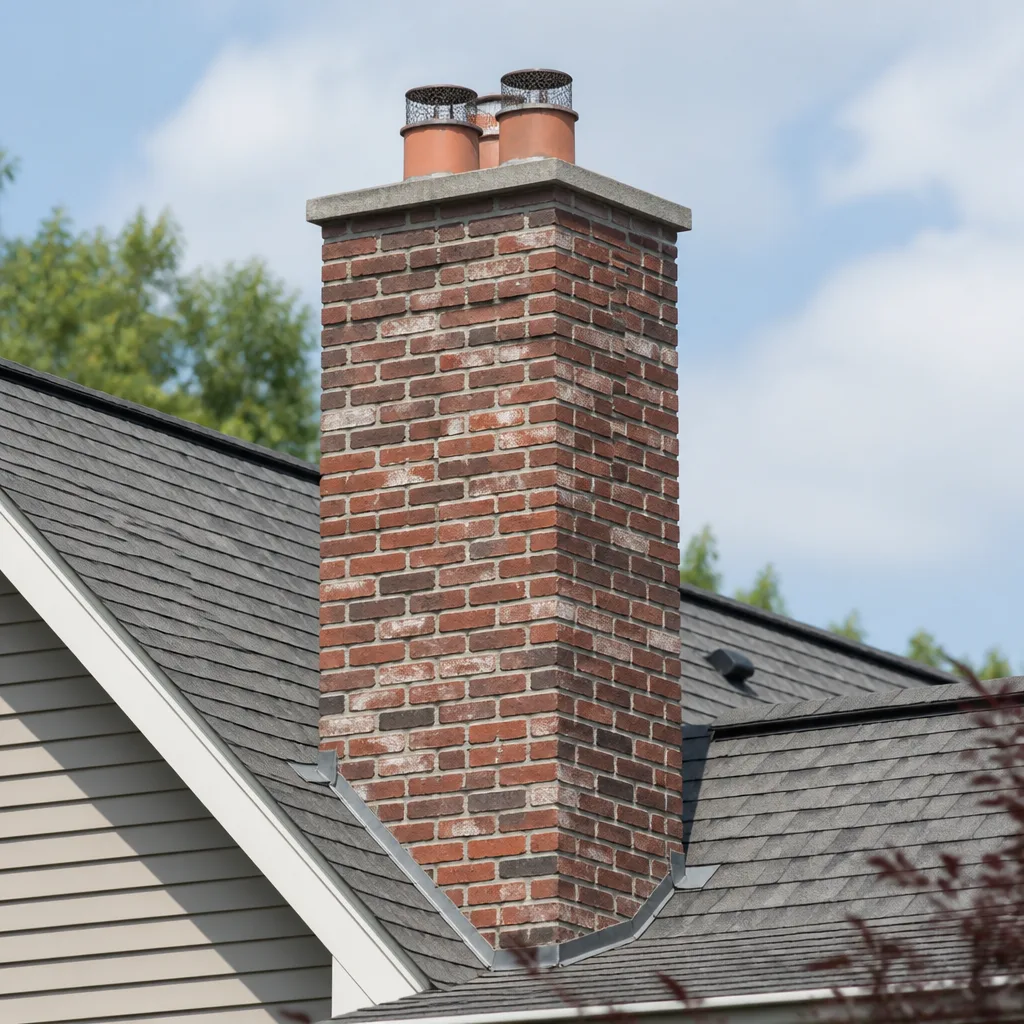
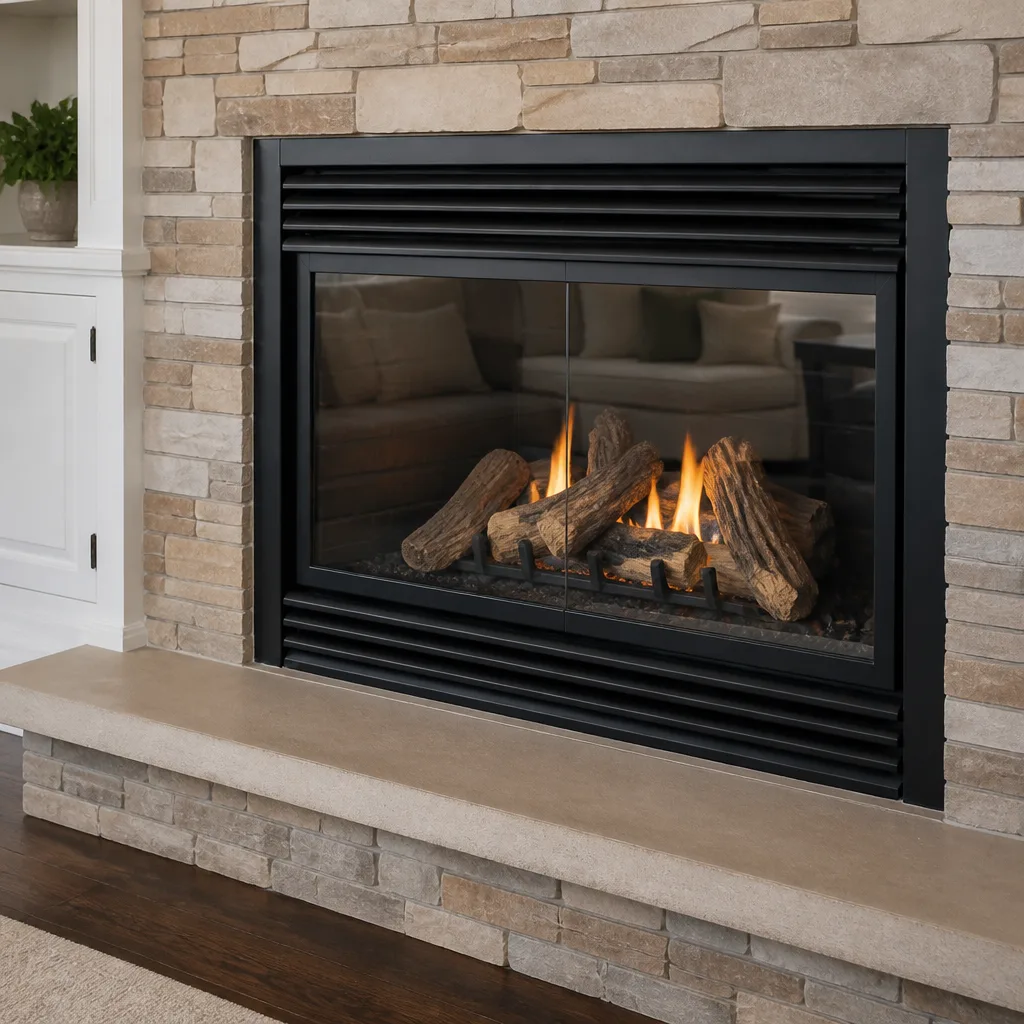
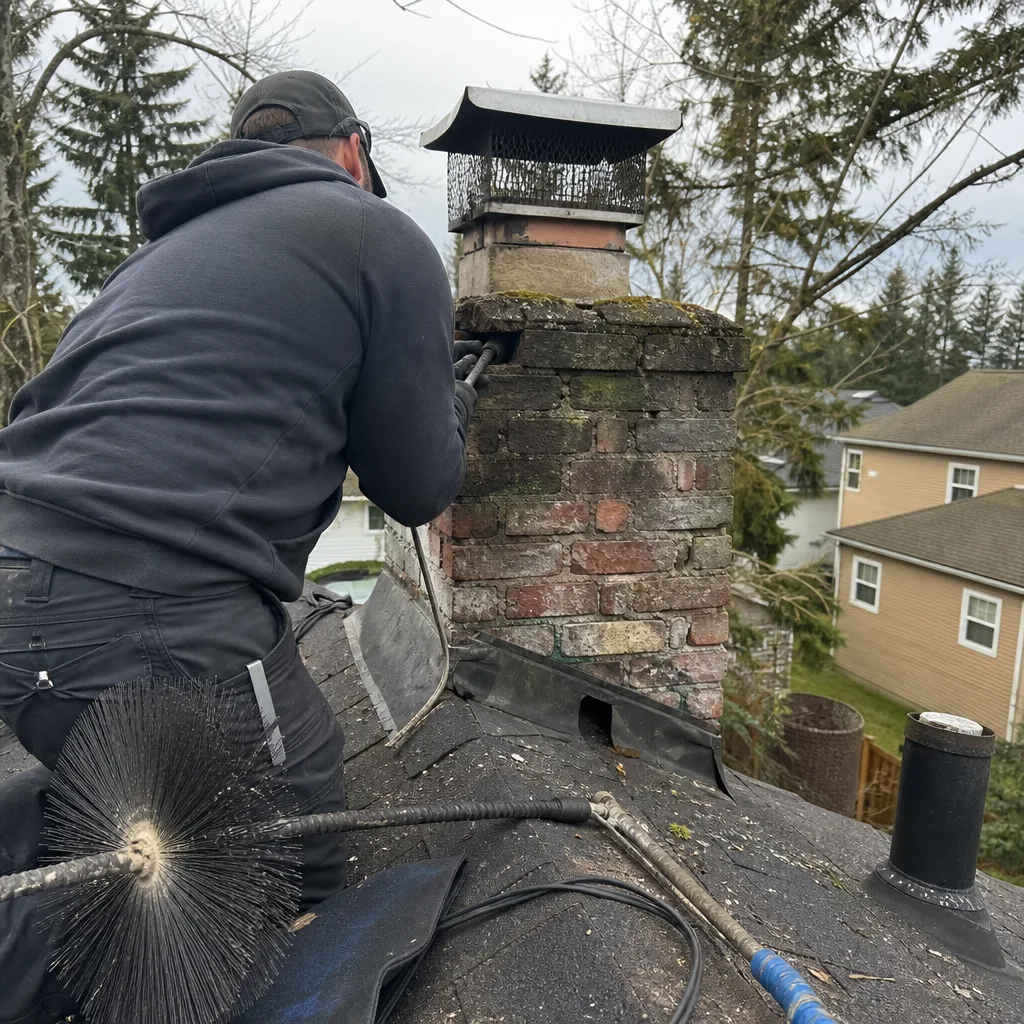 Before
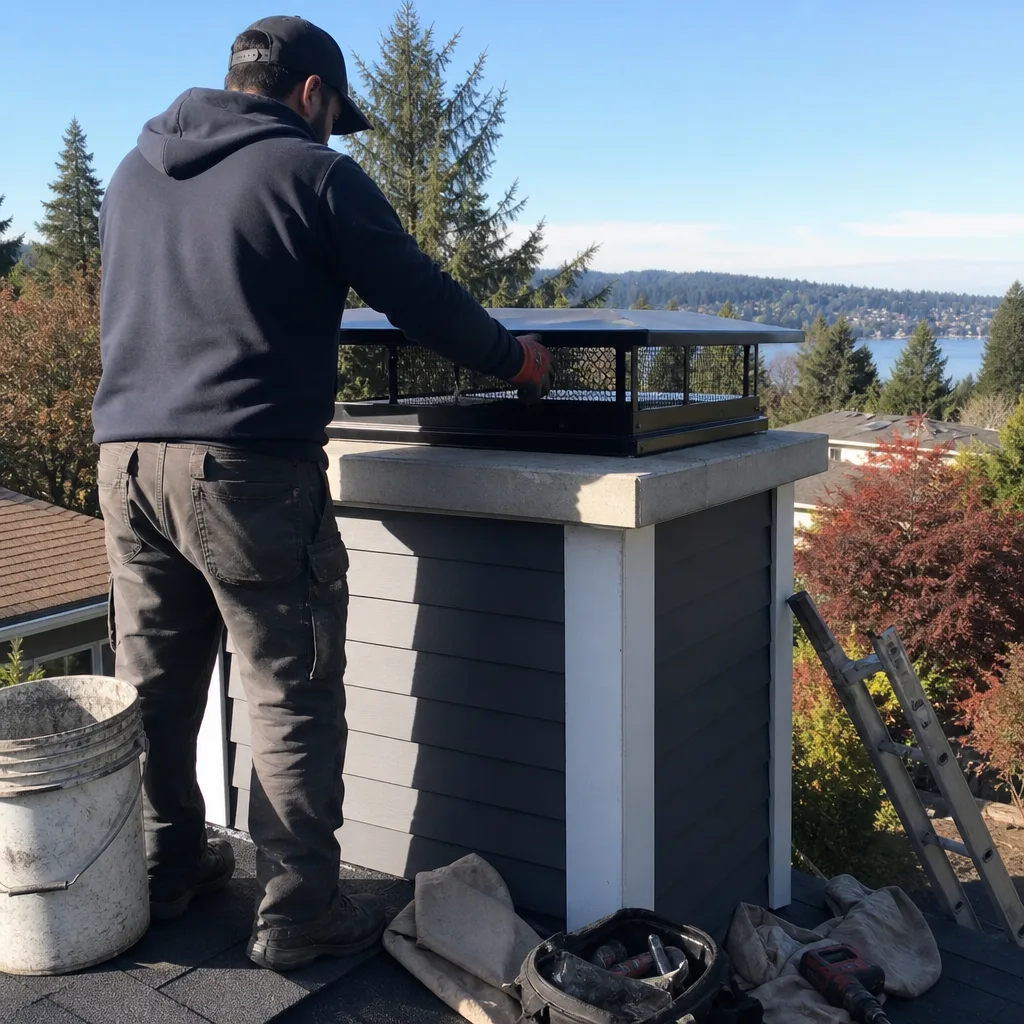 After
After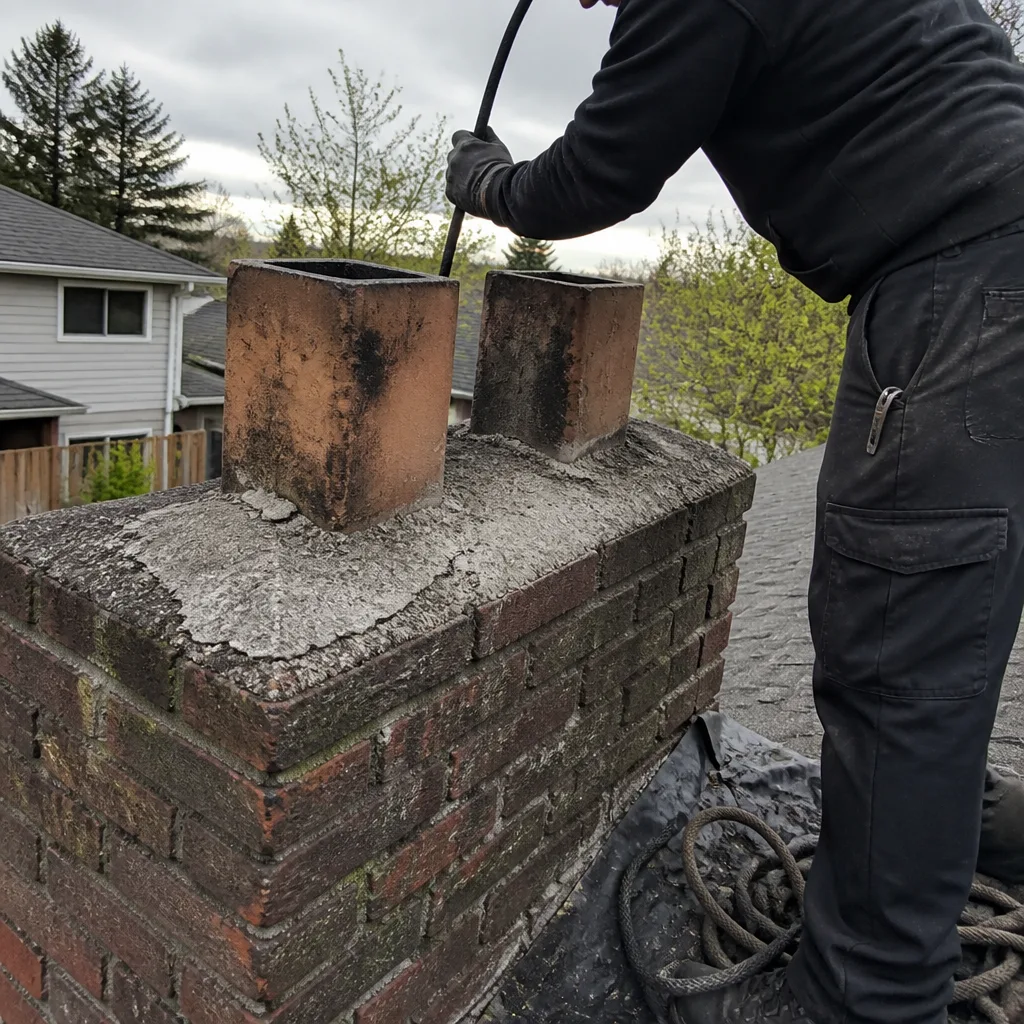 Before
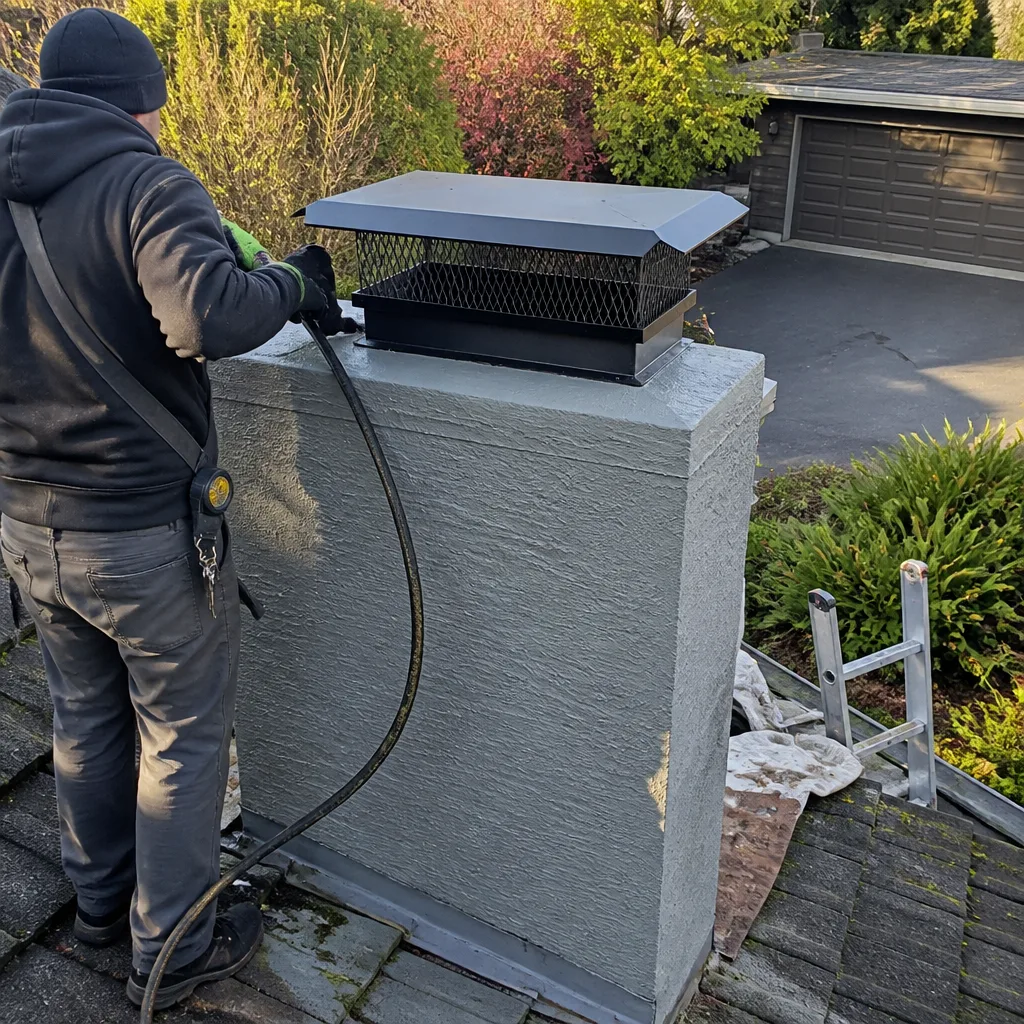 After
After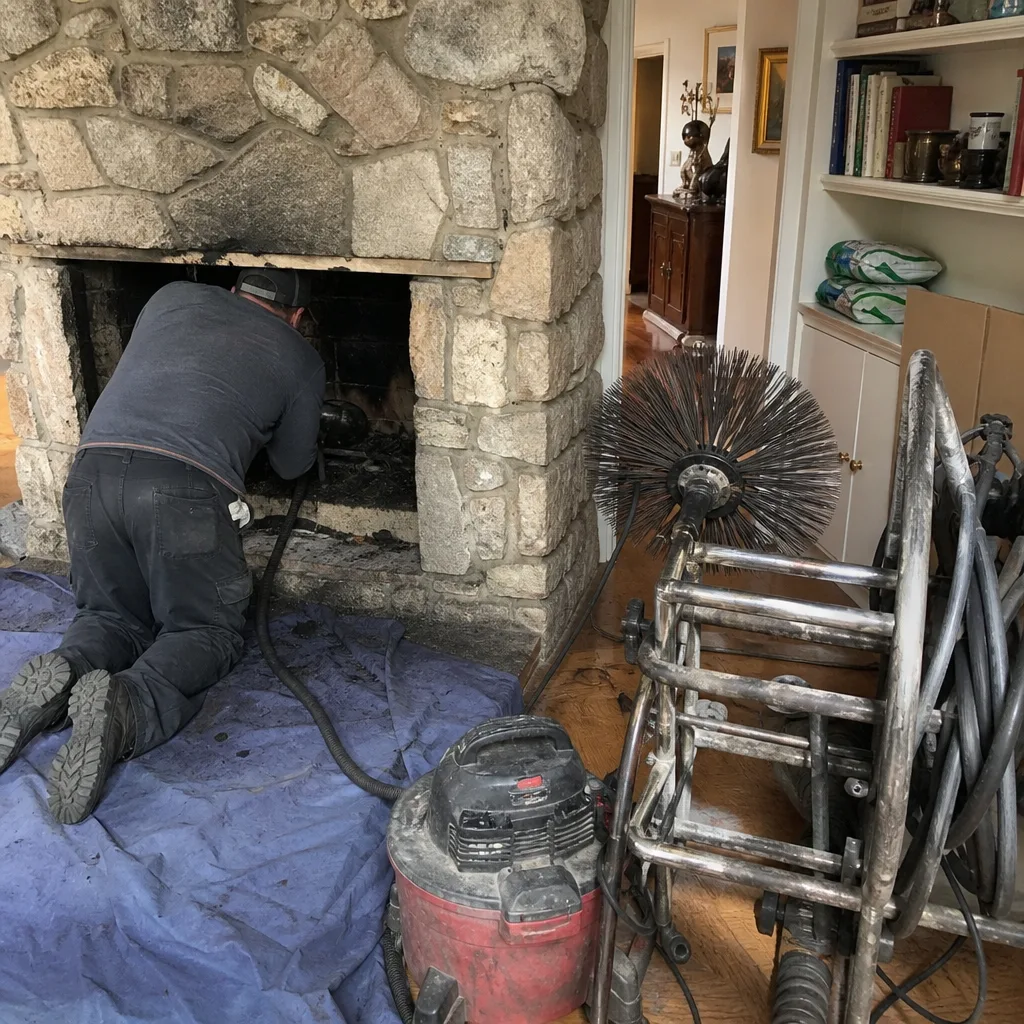 Before
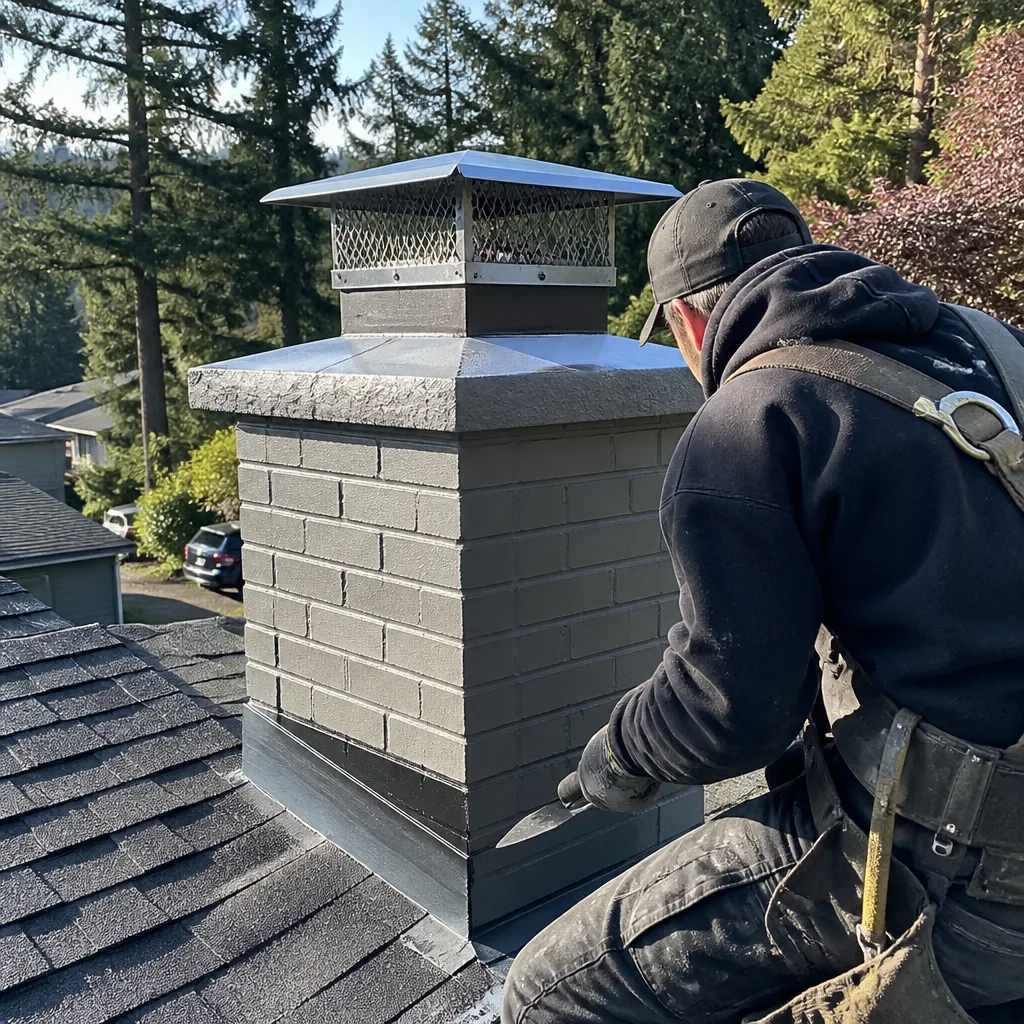 After
AfterDIY vs Professional Chimney Cleaning: The Kirkland Homeowner’s Decision Guide
You can absolutely clean the visible portion of your Kirkland chimney yourself. The question is whether “the visible portion” is where our weather puts the problems - and a camera answer to that question costs less than one chimney fire deductible. In this guide and our more guides & resources, we’ll walk through what a homeowner with a brush kit can realistically verify, what Kirkland’s wet winters and moss-prone masonry do to hidden flue surfaces, and why the real decision isn’t about skill level. It’s about documentation: whether you can prove the work was done, and whether you can see what the brush missed.
Quick Answer
DIY chimney cleaning in Kirkland removes loose soot from the firebox and lower flue but cannot verify creosote removal at liner joints, behind offsets, or at the smoke chamber - areas where our wet climate accelerates buildup. A professional cleaning with NFPA 211 Level 2 camera inspection provides documented proof of flue condition, satisfies homeowner insurance maintenance requirements, and typically costs $189-$329 for a standard sweep with full documentation.
Table of Contents
- What DIY Chimney Cleaning Actually Accomplishes
- The Camera Gap: What You Cannot See or Verify
- Kirkland-Specific Conditions That Shift the DIY Calculus
- Insurance, Liability, and the Documentation Problem
- The True Cost Comparison: DIY vs Professional
- When DIY Actually Makes Sense
- Common Mistakes to Avoid
- When to Call a Professional
- Frequently Asked Questions
 Before
 After
AfterWhat DIY Chimney Cleaning Actually Accomplishes
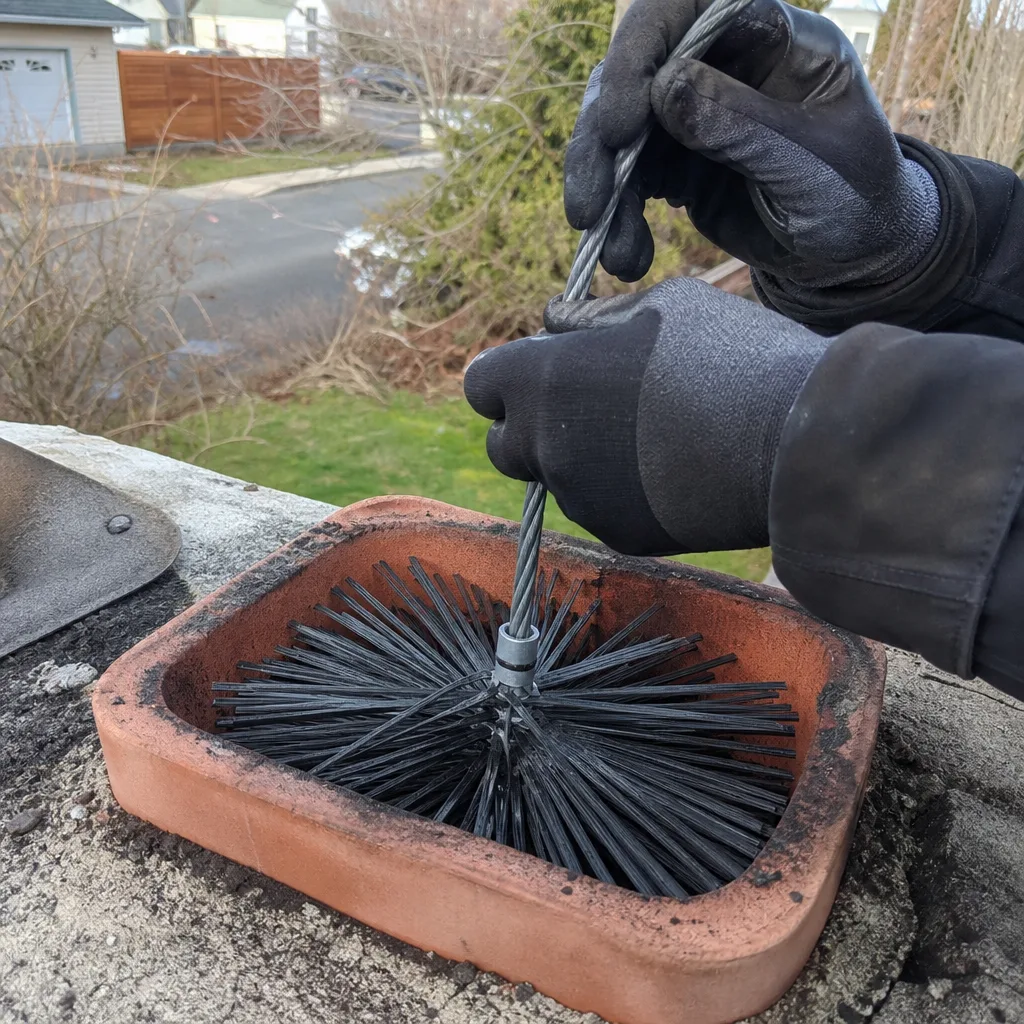
A homeowner chimney brush kit - typically a fiberglass rod set with a poly or wire brush head, a narrow shovel, and a shop vacuum with HEPA filtration - can remove loose, powdery soot (Class I creosote) from accessible surfaces. In a straight, single-story flue with no offset, you can push the brush from the firebox up to the damper and sometimes beyond. You’ll get ash and debris out of the smoke shelf. The firebox brick will look cleaner. This is real work, and it has real value in the right circumstances.
What the brush kit cannot do is more important to understand:
- It cannot apply the rotational force needed to remove glazed creosote (Class III), which forms a hard, tar-like coating that adheres to flue tiles - common in Kirkland where homeowners burn wet or unseasoned wood during power outages
- It cannot navigate an offset flue, where the flue makes a bend to avoid a staircase or structural member; the brush skips the corner entirely
- It cannot reach the full height of a two-story flue without risking separation of rod sections in the flue, which then requires professional retrieval
- It cannot inspect the flue liner for cracks, spalling tile, or mortar joint failure - the conditions that lead to carbon monoxide intrusion or chimney fires
- It cannot document the work for insurance, warranty, or real estate transaction purposes
We’ve retrieved brushes from Kirkland flues in neighborhoods from Houghton to Juanita where rod sections separated at a coupling. The homeowner saved $200 on a sweep and spent $340 on extraction and a proper inspection. The math is worth doing honestly.
The Chimney Cleaning & Sweep in Kirkland process we follow includes mechanical brushing with powered whips for glazed deposits, followed by camera verification - not instead of brushing, but after it.
The Camera Gap: What You Cannot See or Verify
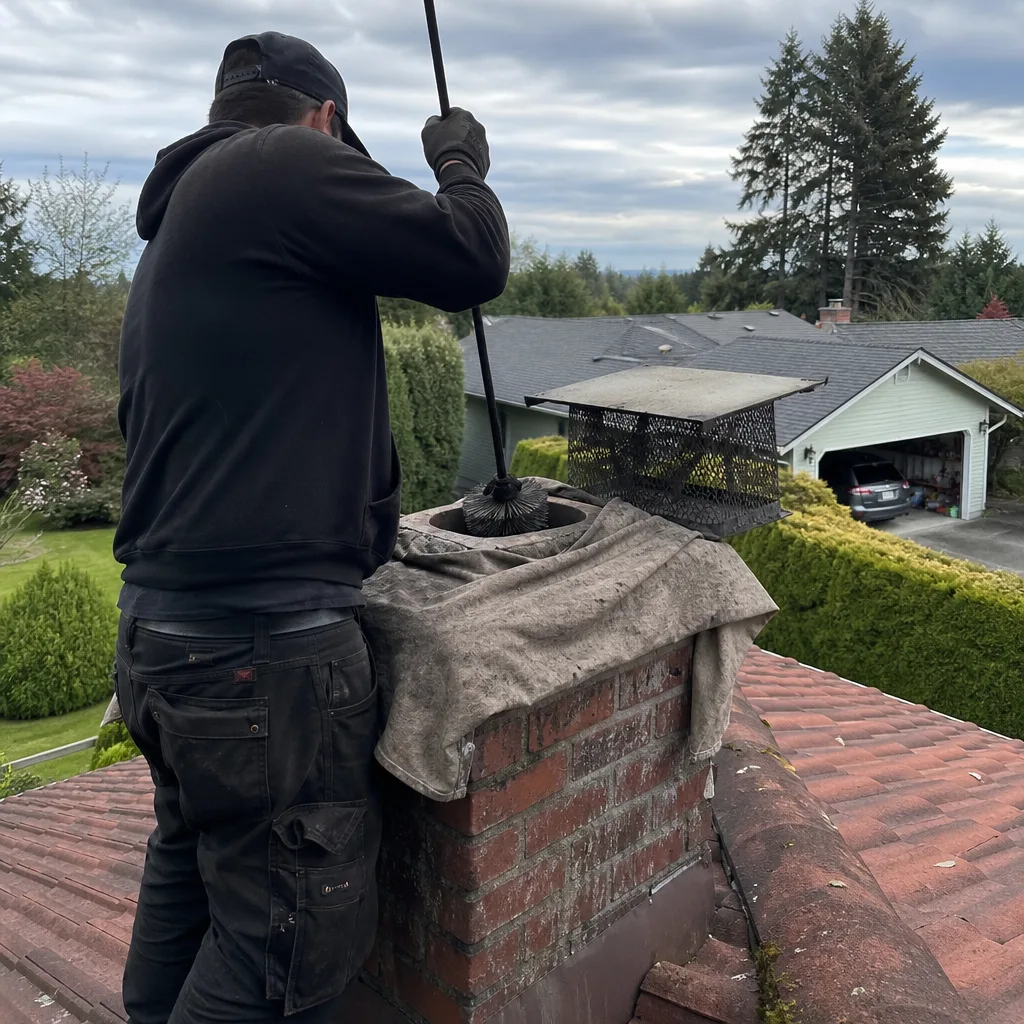
This is the core of the decision, and it’s the piece most DIY guides omit entirely. Cleaning a chimney without inspecting it is like changing your oil without checking the filter. The work happened. Whether it solved the problem is unknown.
A chimney flue is a vertical shaft, typically 6 to 12 inches in diameter, running 15 to 35 feet. In that space, critical conditions develop in areas no brush can reach and no eye can see:
- Liner joints in clay tile flues. Each 2-foot tile section has a mortar joint. Heat cycling cracks these joints, creating gaps where creosote accumulates and combustion gases escape into the chimney wall. A brush passes over the gap; a camera stops and documents it.
- The smoke chamber. The area above the damper and below the flue proper, often with sloping walls that narrow toward the flue. This is where the most dangerous creosote buildup occurs in older Kirkland homes, and it’s where a standard brush kit is least effective. NFPA 211 requires parging (smoothing) of smoke chamber walls when deterioration exceeds 1/4 inch - a condition found only by camera or direct entry.
- Behind flue offsets. When a chimney must bend around a structural element, the brush rides the outside of the curve. The inside corner, where creosote concentrates, receives minimal contact. Only a camera shows whether the offset area is clean or coated.
- The flue crown and top tile. Water intrusion at the crown saturates the top flue tiles, accelerating spalling (surface flaking). A brush won’t reveal this; a camera looking downward from the top, or upward from below, will.
Since 2009, Clause 4 of the Haven Standard has required a documented photo record on every job. Not because regulations demanded it then - they didn’t - but because without it, neither we nor the homeowner could verify that the flue was actually clean. That archive now exceeds 38,000 chimney records. When a Kirkland homeowner calls with a question about their flue condition from three years ago, we pull the photos. A DIY cleaning produces no such record.
The Level Two Chimney Kirkland home page explains how this documentation standard applies to every service we provide.
Kirkland-Specific Conditions That Shift the DIY Calculus
Kirkland’s climate and housing stock create conditions that make DIY chimney cleaning riskier here than in drier, flatter markets, as detailed in our Seasonal Chimney Cleaning Care for Kirkland: Year-Round Homeowner’s Guide. These aren’t abstract concerns; they’re patterns we’ve documented across thousands of local inspections.
Moss-covered crowns and mortar saturation. Kirkland receives 38+ inches of annual precipitation, and our mature tree canopy keeps chimneys shaded and damp. Moss on a chimney crown isn’t cosmetic - it indicates chronic moisture retention that saturates the crown mortar and wicks into the flue lining. A homeowner brushing the firebox has no visibility into crown condition. We’ve found crowns in Finn Hill and Kingsgate with mortar so saturated that a gentle probe exposed the flue tile beneath. The brush kit doesn’t address this. Left unsealed, water intrusion destroys the liner from the top down.
Gas inserts requiring liner integrity checks. Many Kirkland homes built 1970-1995 have original masonry chimneys later fitted with gas fireplace inserts. The insert vents through a flexible liner dropped down the existing flue. DIY cleaning of the firebox doesn’t inspect the liner for corrosion, separation at joints, or blockage by collapsed masonry. A camera scan checks the full liner length. Materials like those from DuraFlex and Olympia Chimney, procured through our Haven buying network, are specified when replacement is needed - but specification requires knowing the existing liner’s condition first.
Offset flue geometry in hillside construction. Kirkland’s sloped terrain from Lake Washington up to the Inglewood-Finn Hill ridge means many homes have chimneys with offsets to clear structural members or rooflines. A standard brush kit with straight rods cannot navigate these bends. Powered whips on flexible cable can, but they require controlled deployment and retrieval that most homeowners don’t have equipment for.
Seasoned fuel availability and burning habits. Our wet climate makes true 20%-moisture seasoned firewood harder to source and store than in eastern Washington. Burning insufficiently dried wood produces Class III glazed creosote, which a homeowner brush won’t remove. Professional sweeps use mechanical whips, chemical treatments, or in severe cases, removal with chains or rotary systems - tools and techniques requiring training.
These conditions don’t make DIY impossible. They make verification essential. And verification requires a camera.
Insurance, Liability, and the Documentation Problem
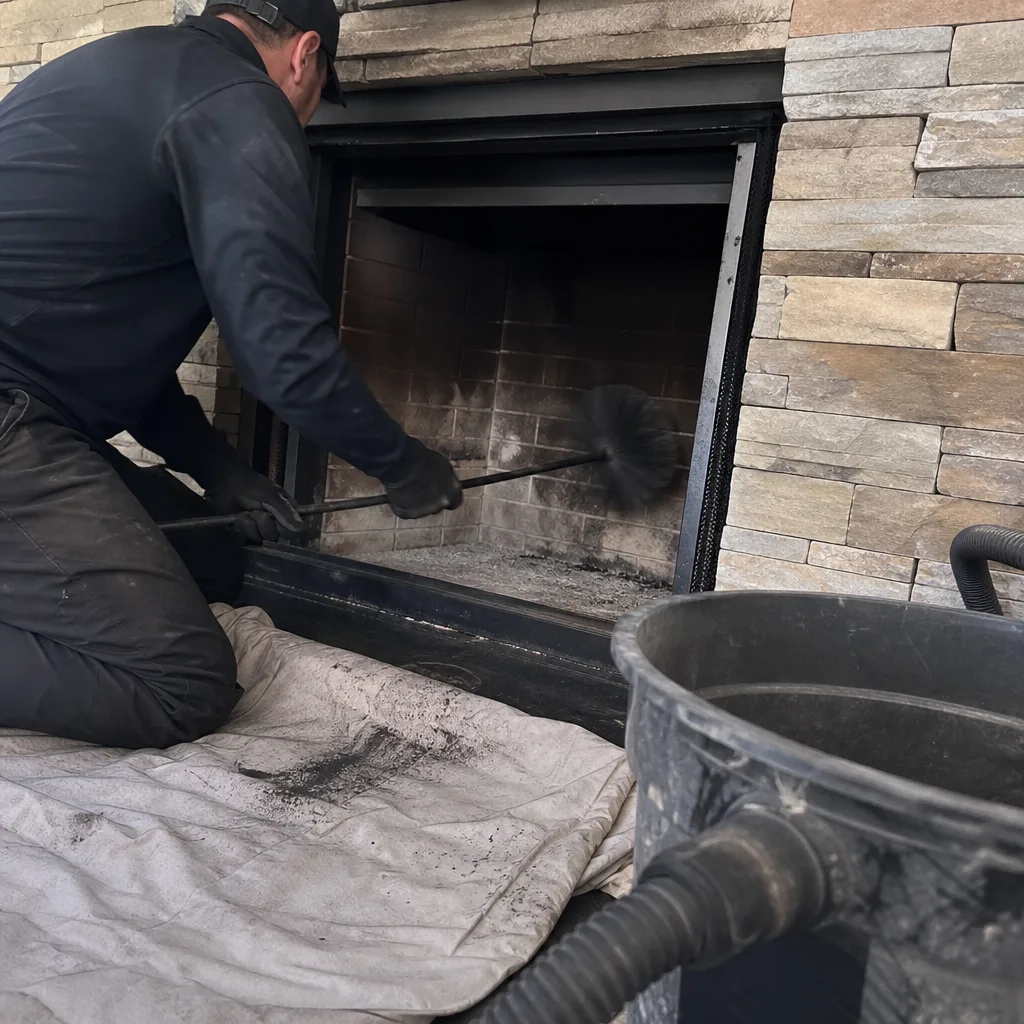
This is the dimension almost entirely missing from DIY chimney cleaning discussions, and it’s where the “savings” evaporate fastest.
Standard homeowner insurance policies contain maintenance and negligence exclusions. The language varies by carrier, but the pattern is consistent: damage from “lack of maintenance” or “failure to maintain” is not covered. After a chimney fire, the adjuster’s investigation will request maintenance records. What can you produce?
A DIY cleaning has no invoice, no technician license number, no inspection report, no photo documentation. It has your word that you brushed the flue. In a claims dispute, that word competes against an insurance company’s interest in denying coverage. We’ve seen this in Kirkland claims where the homeowner’s DIY maintenance was ruled insufficient to satisfy policy language requiring “professional inspection and cleaning.”
The documentation a professional sweep provides matters:
- Written scope of work performed, with technician identification and license information
- Photo or video record of flue condition before and after cleaning
- Written notation of any defects, hazards, or recommended repairs
- Date-stamped record for insurance or real estate disclosure files
Clause 1 of the Haven Standard - “Have it in writing” - requires a written price, written scope, and written warranty before any work begins. This isn’t sales protocol. It’s documentation architecture designed to protect both parties. When we complete a Fireplace Services in Kirkland appointment, the homeowner receives the photo record, the written scope, and the warranty document. No phone call to reconstruct what happened. No dispute about what was found.
For real estate transactions, this documentation is often mandatory. Kirkland buyers in the $1.2M+ market increasingly request Level 2 inspection records. A seller with DIY maintenance history has nothing to provide.
The True Cost Comparison: DIY vs Professional
The superficial comparison - $45 brush kit vs. $250 professional sweep - misses most of the actual cost. Here’s the honest accounting, with full details in our Chimney Cleaning Cost Breakdown: The Kirkland Homeowner’s Reference for 2026.
DIY Chimney Cleaning: Real Costs
| Item | Cost Range |
|---|---|
| Basic brush kit (rods, brush, shovel) | $45-$85 |
| HEPA shop vacuum or rental | $80-$150 (purchase) or $35/day (rental) |
| Safety equipment: respirator, goggles, drop cloths, ladder stabilizer | $60-$120 |
| Creosote disposal (Kirkland hazardous waste fees apply for quantities over household limit) | $0-$25 |
| Camera inspection to verify results (recommended after any DIY cleaning) | $150-$250 |
| Time: setup, execution, cleanup, disposal run | 4-6 hours |
| Total DIY with verification | $335-$630 |
Professional Cleaning with Documentation
| Item | Cost Range |
|---|---|
| Standard sweep with NFPA 211 Level 2 camera inspection | $189-$329 |
| Included: mechanical brushing, debris removal, photo record, written report | $0 (standard) |
| Included: 365-Day Done Right Promise warranty | $0 (standard) |
| Time: homeowner presence for scheduled appointment | 1.5-2 hours |
| Total professional with documentation | $189-$329 |
The cost crossover is clear: DIY with proper verification costs as much or more than professional service, without the warranty, without the liability protection, and with significantly more homeowner time invested. The brush kit alone, without camera follow-up, is cheaper - but it’s also unverified, undocumented, and potentially incomplete.
We source materials from HeatShield, Gelco, and Famco through Haven’s buying network specifically to keep customer prices honest. The markup on materials in this industry can be substantial; pooled purchasing power matters to what we charge.
When DIY Actually Makes Sense
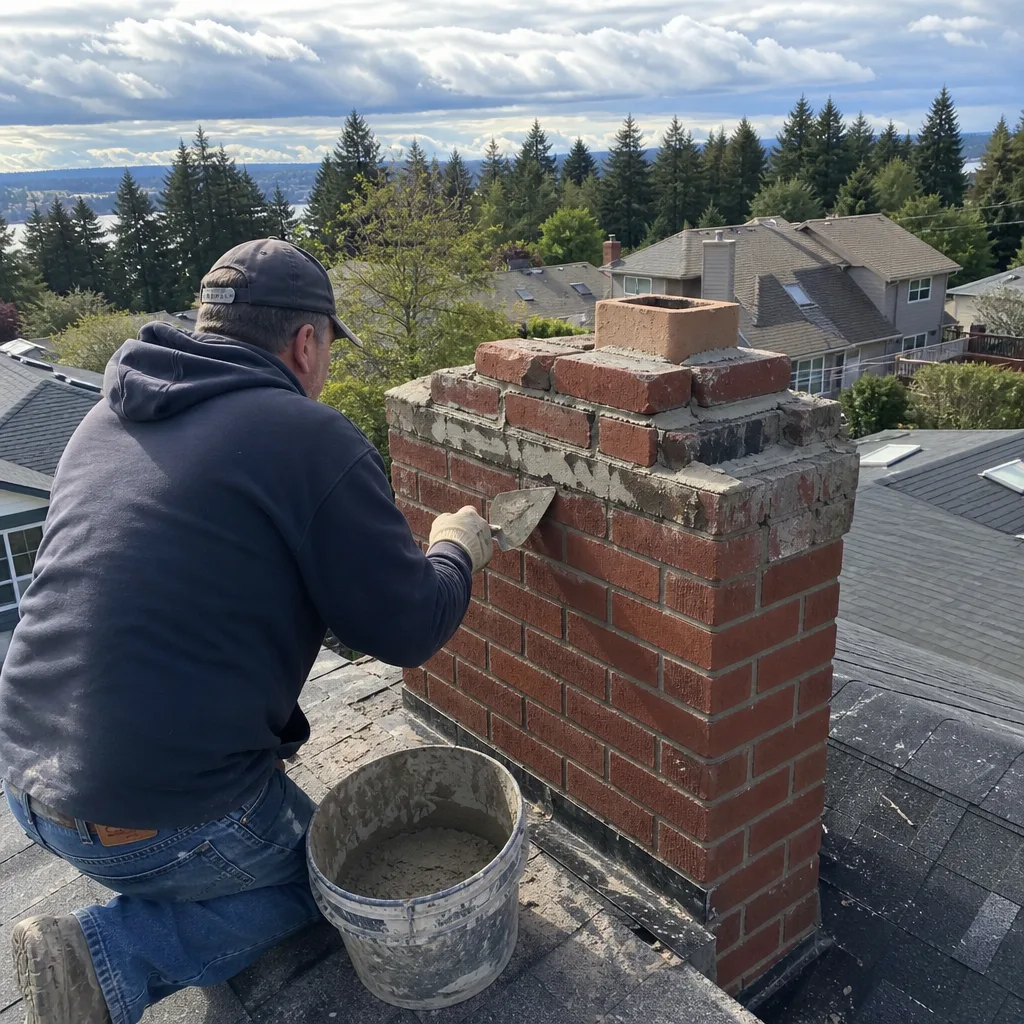
There is a specific scenario where homeowner brush cleaning is reasonable practice, and we want to name it precisely rather than dismiss DIY entirely.
The right conditions:
- Single-story home with straight flue, no offsets, no bends
- Recent professional NFPA 211 Level 2 inspection (within 12-18 months) showing clean liner, intact mortar joints, no spalling or cracking
- Wood-only fireplace with consistently seasoned fuel (verified with moisture meter, below 20%)
- Light burning schedule: occasional weekend fires, not daily heating season use
- Homeowner comfortable with ladder work, respiratory protection, and proper creosote disposal
- Commitment to professional camera inspection every 1-2 years, never exceeding NFPA’s annual inspection guideline for active wood-burning systems
In this narrow case, a homeowner brush cleaning between professional scans is maintenance, not replacement. The critical element is the recent professional scan that established baseline condition. Without it, you’re cleaning blind.
What this scenario does not include: gas inserts (liner integrity unknown), homes with moss-covered crowns (water intrusion risk), properties with chimney-mounted antennas or steep roof pitches (fall hazard), or any system that has experienced a chimney fire or significant seismic event. In those cases, DIY cleaning is inappropriate regardless of skill level.
Even in the “appropriate DIY” scenario, we recommend the camera scan follow-up. Clause 4 documentation isn’t about distrusting the homeowner. It’s about having a record that both parties can reference.
Common Mistakes to Avoid
- Assuming a clean firebox means a clean flue. The firebox is the most accessible and most frequently cleaned area. Creosote accumulation in the upper flue, smoke chamber, and liner joints is invisible from below and unrelated to firebox appearance.
- Using a brush that’s the wrong size or material for the flue. A brush too small skips the flue walls; too large can damage clay tiles. Wire brushes on stainless steel liners cause scoring that accelerates corrosion. In Kirkland’s older homes with terra cotta liners, the wrong brush can spall already-weathered tile surfaces.
- Ignoring the smoke chamber. This is the most dangerous overlooked area in DIY cleaning. The smoke chamber’s corbelled (stepped) construction creates ledges where creosote accumulates. Standard brush kits don’t reach it effectively. Professional sweeps use specialized chamber whips or hand tools.
- Improper creosote disposal. Kirkland’s household hazardous waste program accepts limited quantities. Large volumes from a neglected flue may require commercial hazardous waste disposal. Improper disposal (regular trash, outdoor burning, compost) creates fire and environmental hazards.
- Skipping the roof inspection. A complete chimney assessment includes crown, cap, flashing, and exterior masonry condition. These aren’t accessible from the firebox and aren’t addressed by brush cleaning. Water intrusion from a failed crown destroys liners from above while the firebox looks fine below.
- DIY cleaning after a chimney fire without professional assessment. Heat damage to liners can create hidden cracks that a brush won’t reveal. Post-fire inspection requires camera documentation and often requires liner replacement per NFPA 211.
- Believing “no smell, no problem.” Odor is an unreliable indicator. Carbon monoxide is odorless. Class III creosote has minimal smell until heated. A flue can be dangerously obstructed or deteriorated with no detectable household odor.
When to Call a Professional
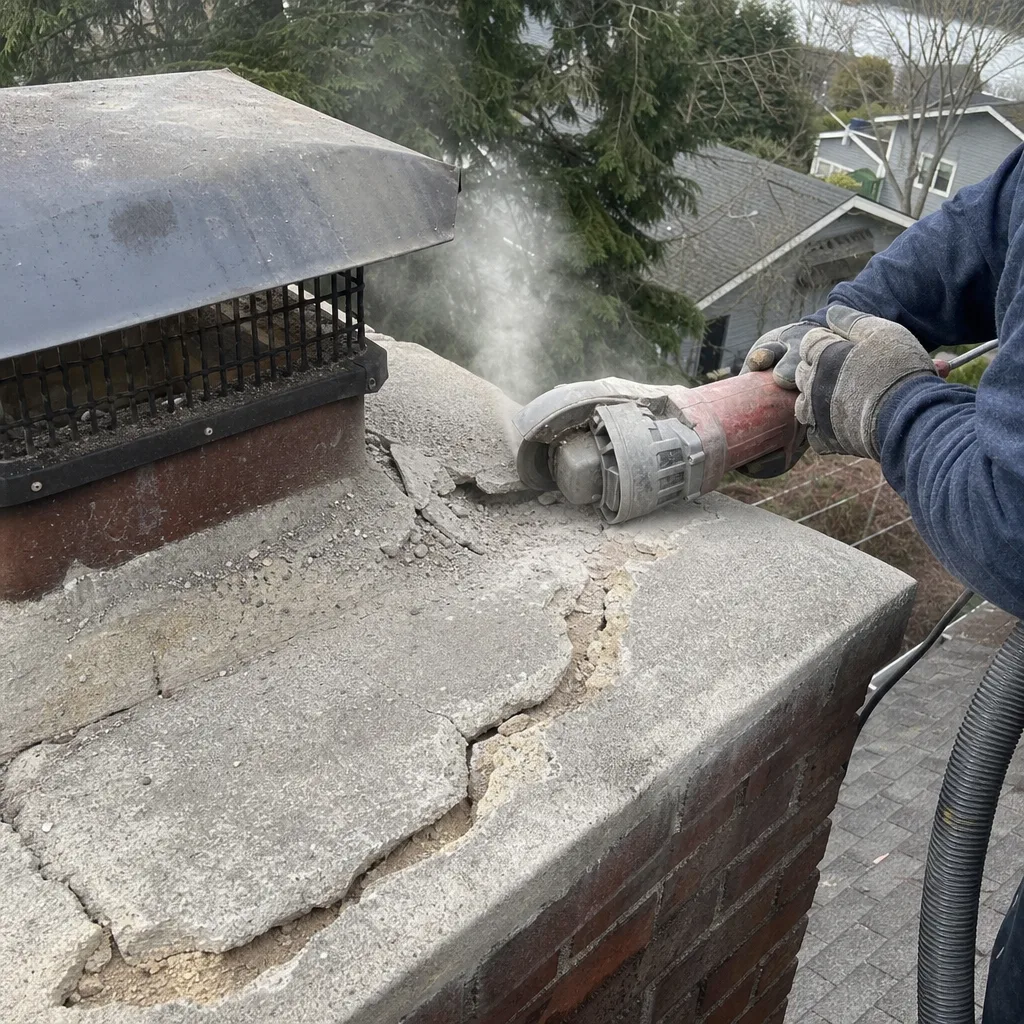
Call a professional sweep when: your flue has any offset or bend; you’ve never had a camera inspection; you burn more than occasionally during heating season; your chimney crown shows moss, cracking, or mortar loss; you’re preparing to sell your home; your insurance policy requires documented maintenance; you’ve changed fuel types (wood to gas, or vice versa); or you’ve experienced any chimney fire, earthquake, or significant weather event. See How to Hire a Chimney Cleaning Contractor in Kirkland: A Step-by-Step Guide for what to ask before you call.
Level Two Chimney Kirkland offers free estimates in Kirkland - call (425) 642-3485. Every estimate includes a written price before work starts, a documented photo record on completion, and our 365-Day Done Right Promise. We also provide a Free Second Opinion on any competitor’s written estimate.
For structural repairs, crown rebuilding, or liner replacement, our Chimney Repair in Kirkland team uses materials from DuraFlex, HeatShield, Gelco, Olympia Chimney, Famco, and Copperfield, sourced through Haven’s buying network to maintain honest pricing.
Frequently Asked Questions
A standard chimney cleaning with NFPA 211 Level 2 camera inspection in Kirkland typically costs $189-$329, depending on flue accessibility, creosote severity, and whether the system is a straightforward wood fireplace or a gas insert with liner. This includes mechanical brushing, debris removal, a documented photo record, and written report. Call (425) 642-3485 for an exact quote - estimates are free.
Yes, if you want to verify that the flue is actually clean and intact. A brush removes what it contacts; a camera confirms what the brush reached. In Kirkland’s wet climate, liner joint deterioration and crown water intrusion are common hidden conditions that brushing alone cannot assess. Clause 4 of the Haven Standard requires photo documentation on every job for this reason.
NFPA 211 recommends annual inspection for all chimney systems, and cleaning as needed based on creosote accumulation. For Kirkland homeowners who burn wood regularly during heating season, annual sweeping is typical. Occasional burners may extend to every 1-2 years with inspection, but never beyond annual inspection. Gas systems require inspection for liner integrity and venting condition, though cleaning frequency is lower.
Skipped maintenance leads to creosote accumulation, which increases chimney fire risk - a fast, high-temperature fire that can crack liners and penetrate wall cavities. It also allows liner deterioration to progress undetected, creating paths for carbon monoxide intrusion into living spaces. In Kirkland’s older homes with original clay liners, freeze-thaw cycling from water intrusion accelerates spalling and liner collapse. The cost of deferred maintenance typically exceeds proactive care by multiples.
Most policies include maintenance exclusions that require “regular” or “professional” inspection and cleaning. A DIY cleaning with no invoice, license number, or inspection report may not satisfy this language in a claims dispute. We’ve seen Kirkland claims where DIY maintenance was ruled insufficient. Professional documentation - written scope, photo record, technician identification - protects your coverage.
We can perform a camera inspection following DIY cleaning, though we typically find that the cost of standalone inspection plus the homeowner’s time and equipment investment approaches or exceeds our standard sweep package. If you’ve already done the work, we’ll inspect honestly and document what we find. If the flue needs additional cleaning, we’ll quote that in writing before proceeding. Call (425) 642-3485 to schedule.
The Bottom Line
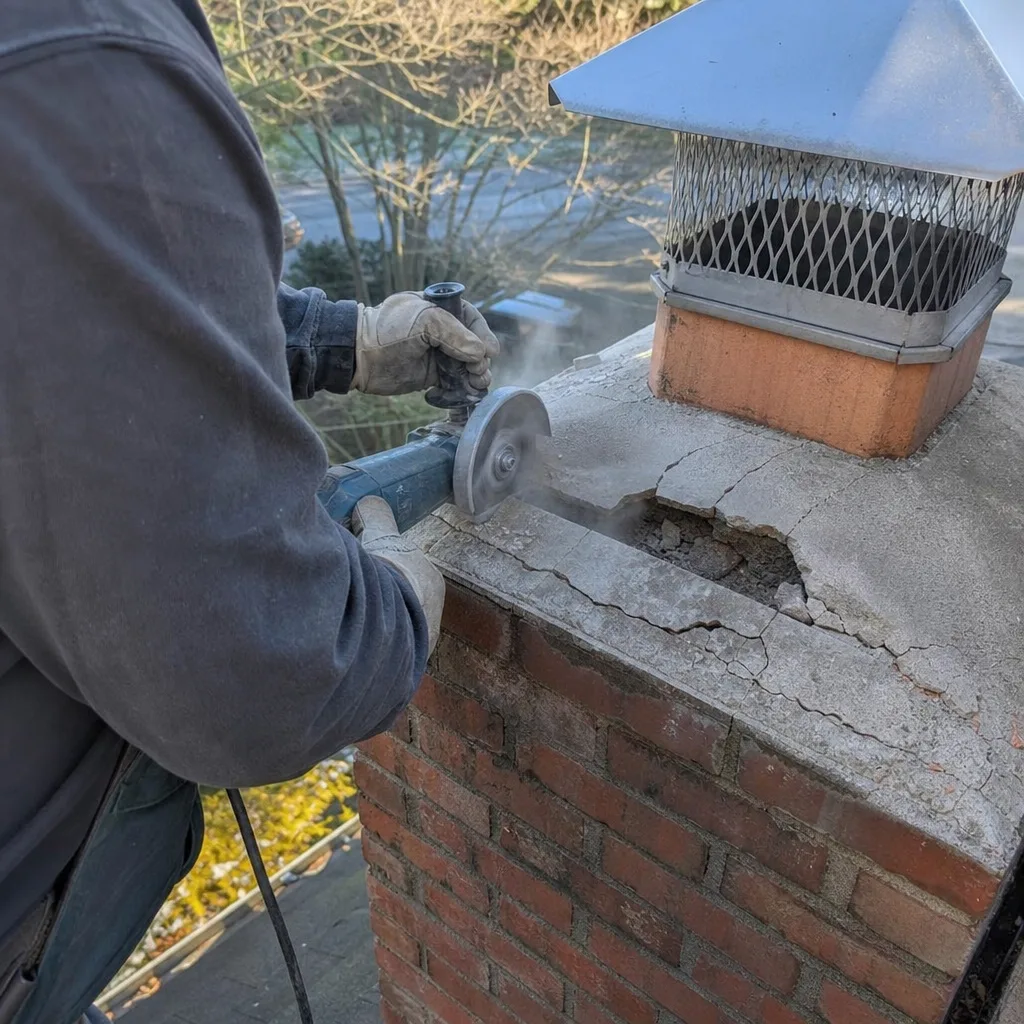
The DIY vs. professional chimney cleaning decision in Kirkland comes down to verification, not ability. A brush kit removes visible soot. It does not confirm liner integrity, liner joint condition, smoke chamber cleanliness, or crown weatherproofing - the conditions that matter for safety and insurance. Our wet climate, offset flue geometries, and moss-prone masonry make hidden problems more likely here than in drier markets. Professional service with camera documentation costs less than DIY plus verification, provides warranty protection, and satisfies insurance requirements. The question isn’t whether you can brush a flue. It’s whether you can afford not to know what the brush missed.
Written by Corrine Halstead, Owner at Level Two Chimney Kirkland, serving Kirkland since 2009.