
Last updated September 22, 2026
Level 1 sweep and inspection to the NFPA 211 annual standard - flue, crown, cap, and flashing checked and photographed
Chimney sweep logs do not sweep chimneys. They loosen some creosote - which then falls where a brush and vacuum still have to collect it.
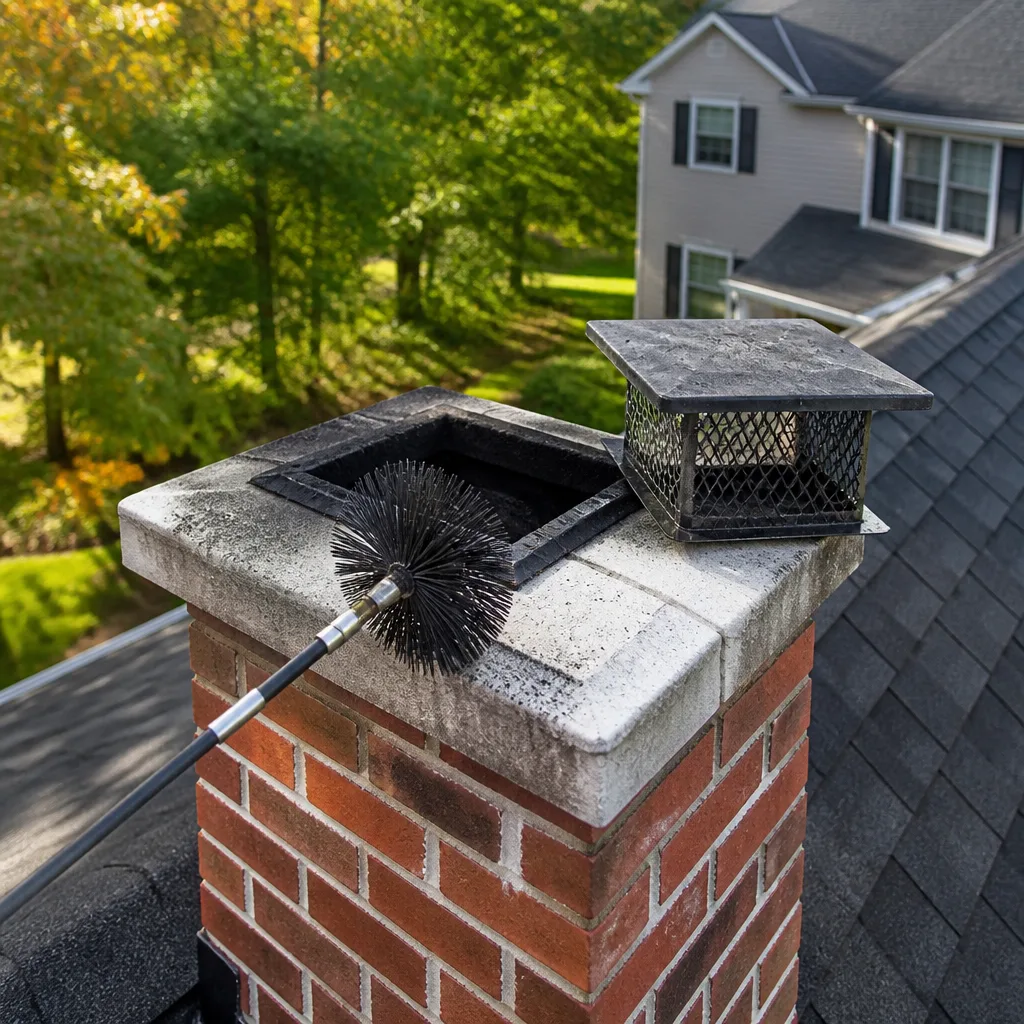
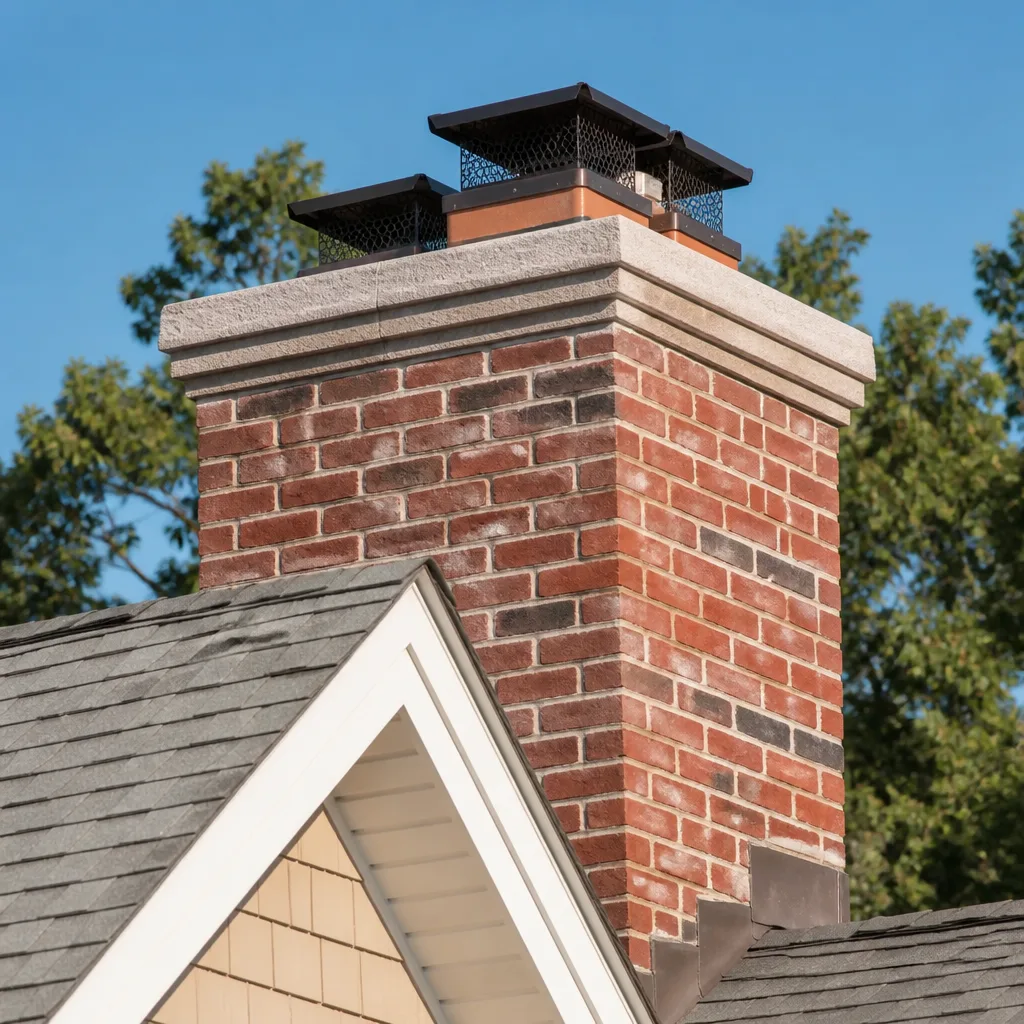
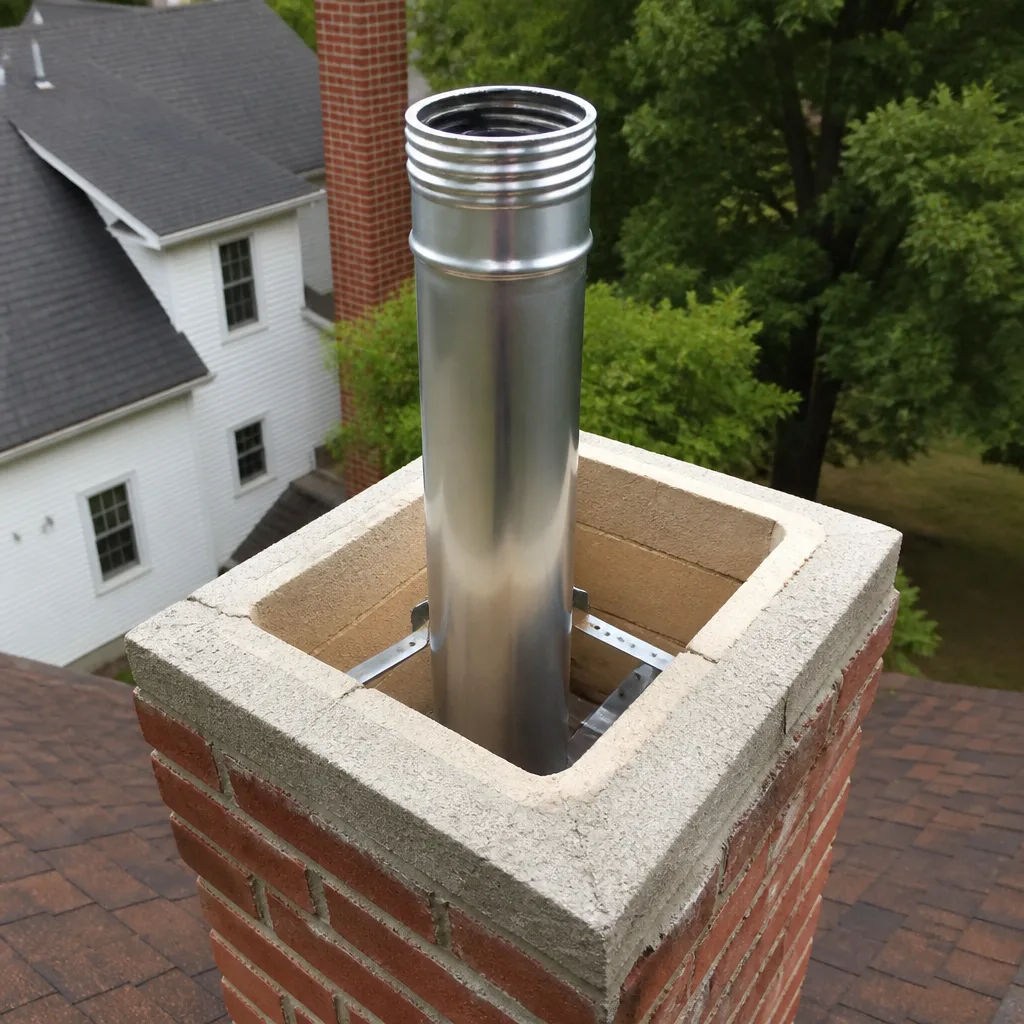
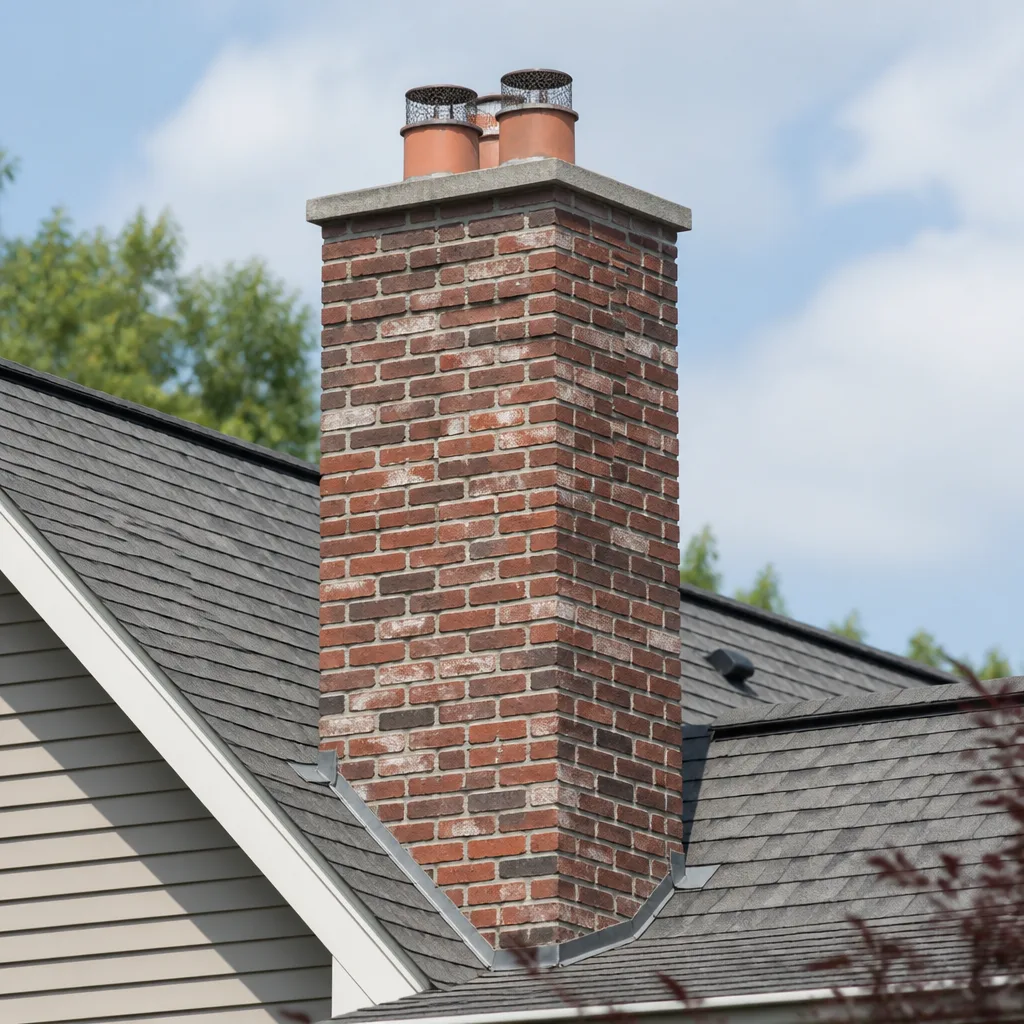
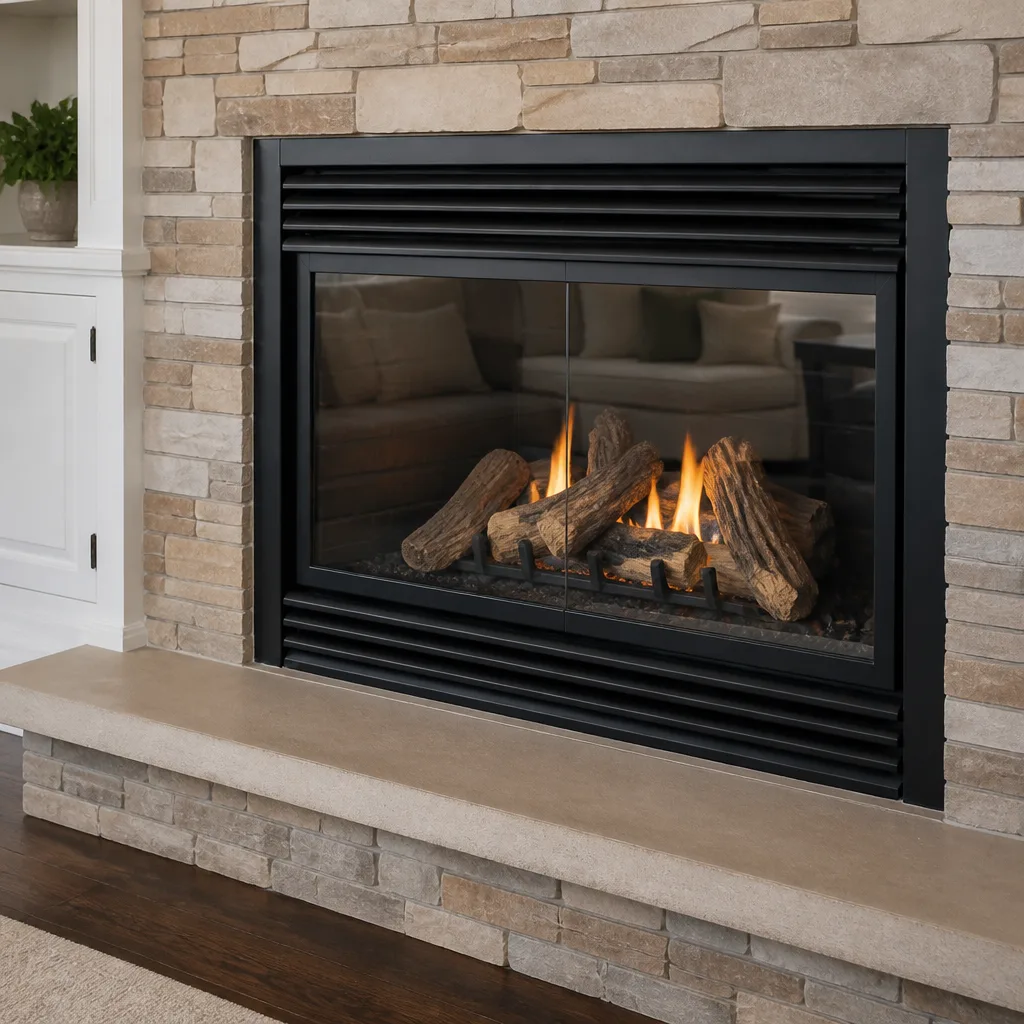
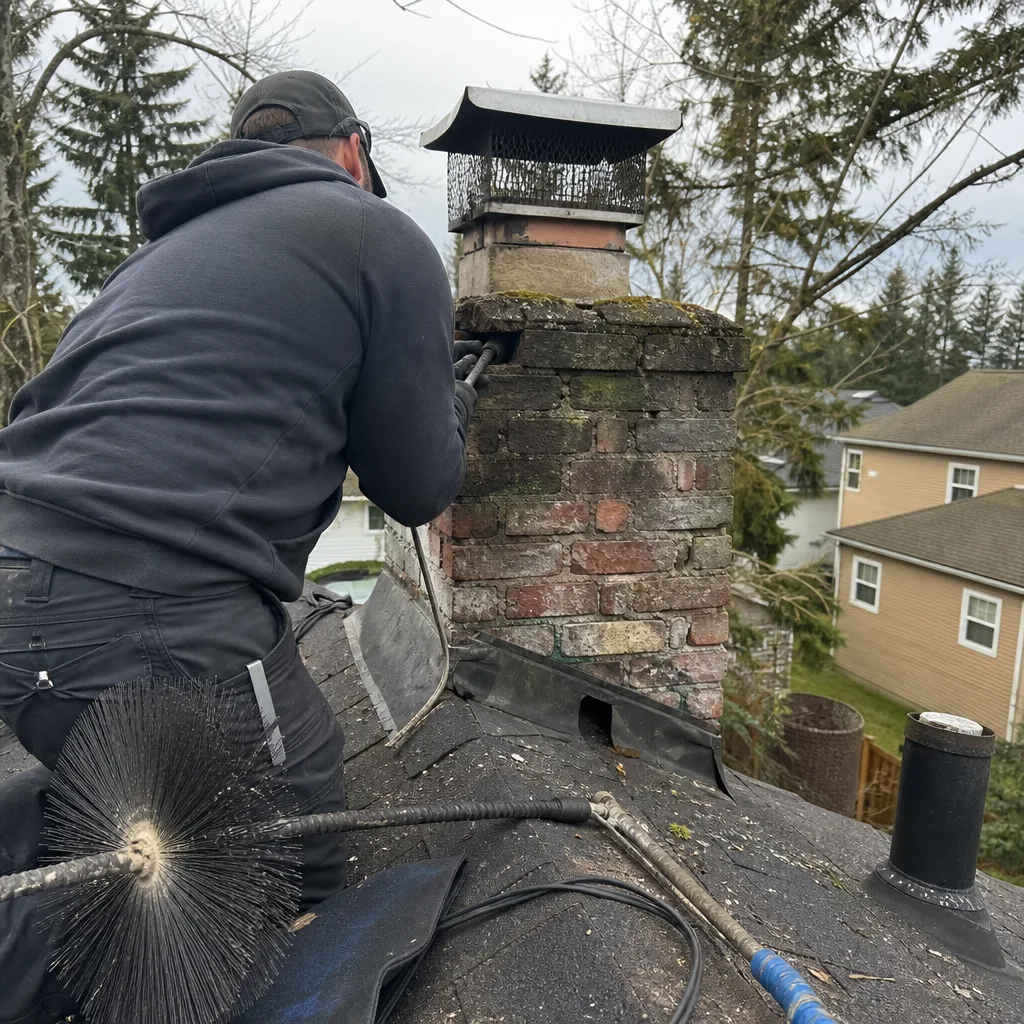 Before
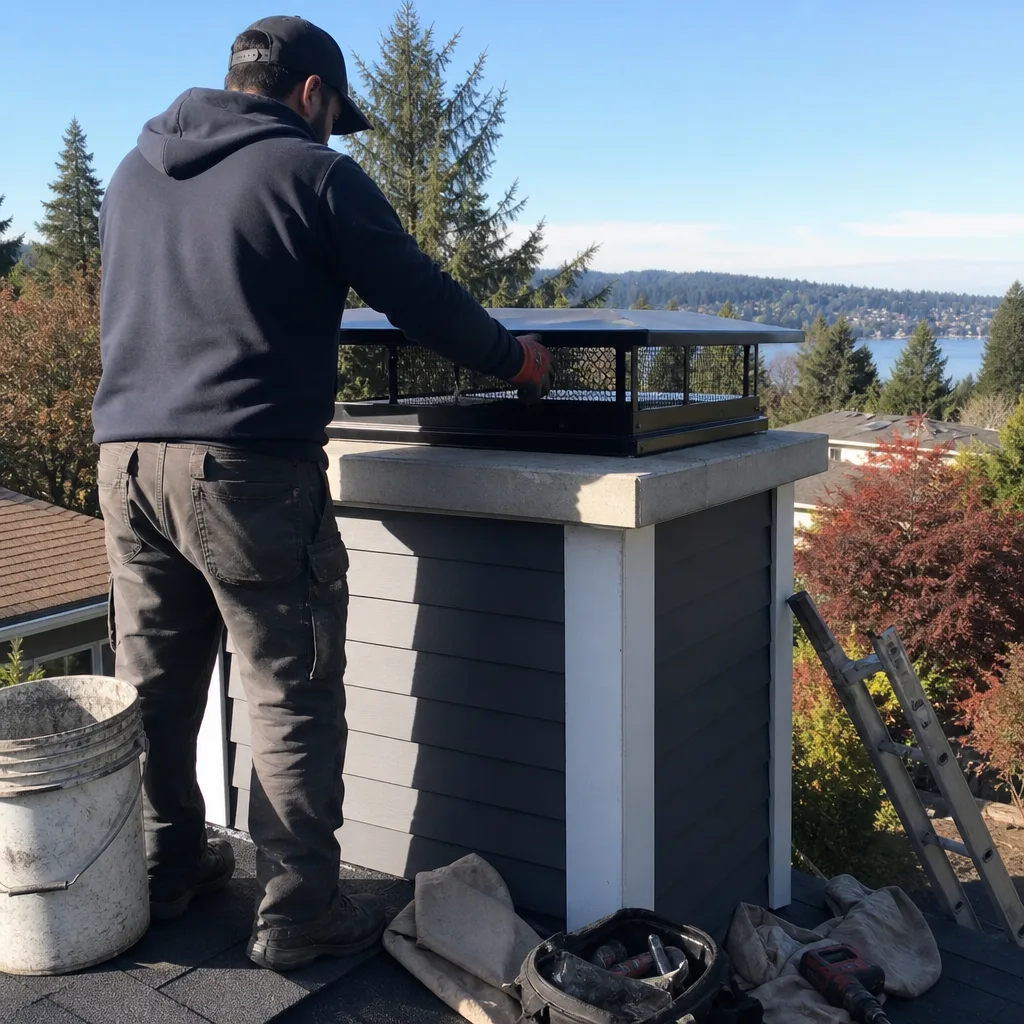 After
After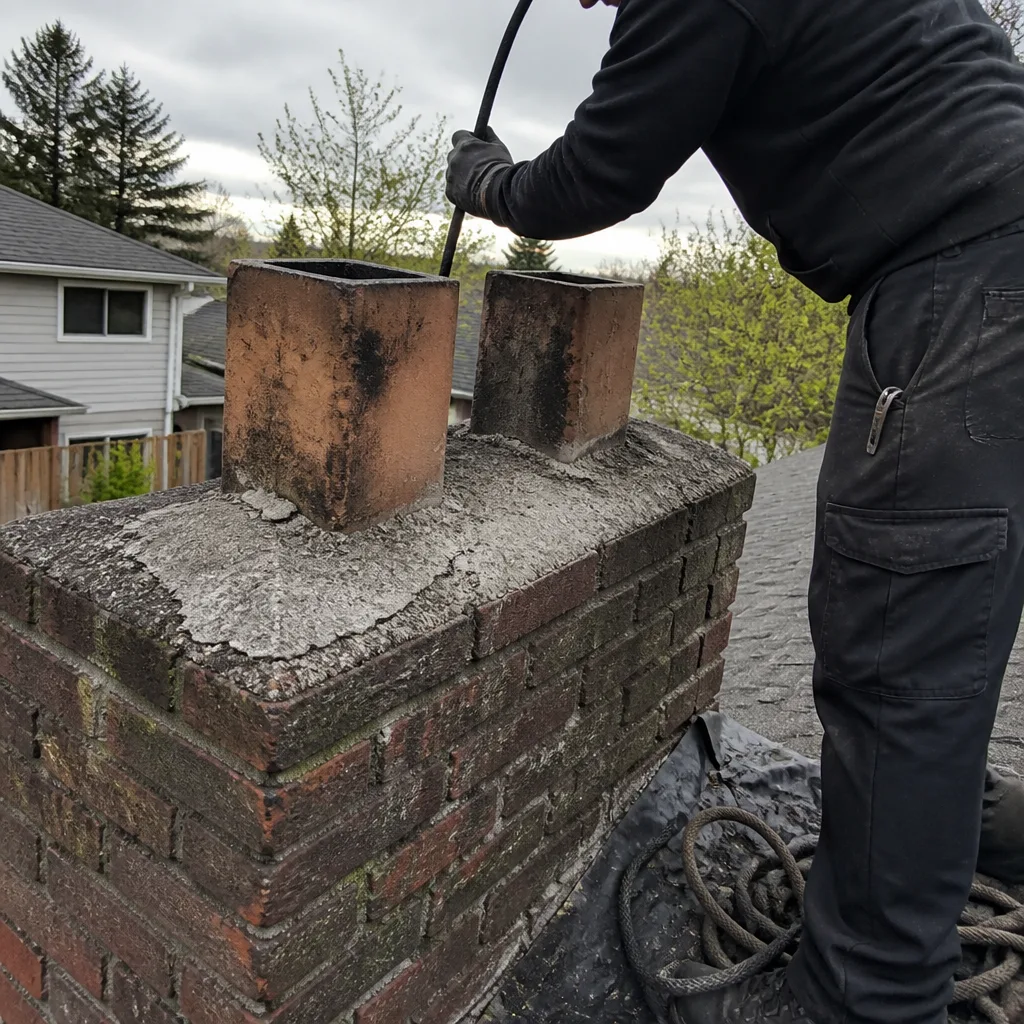 Before
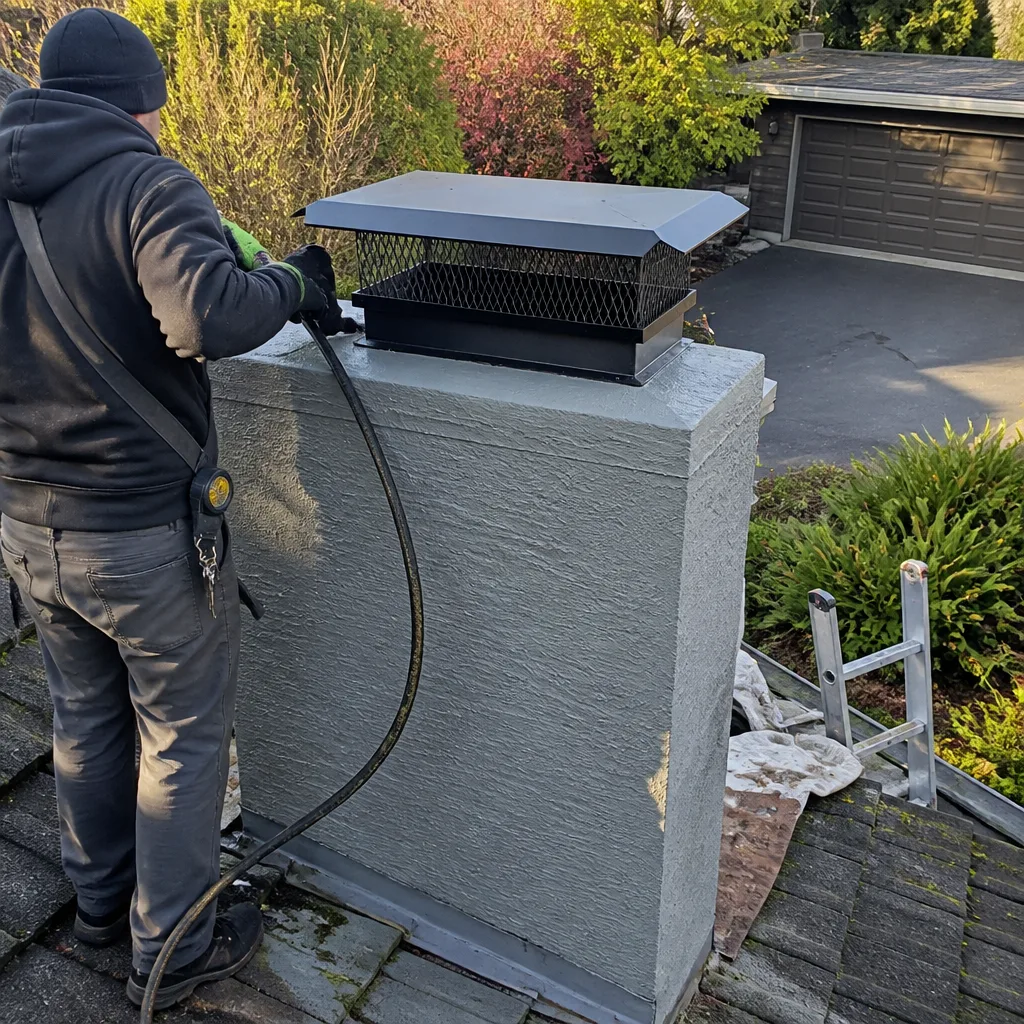 After
After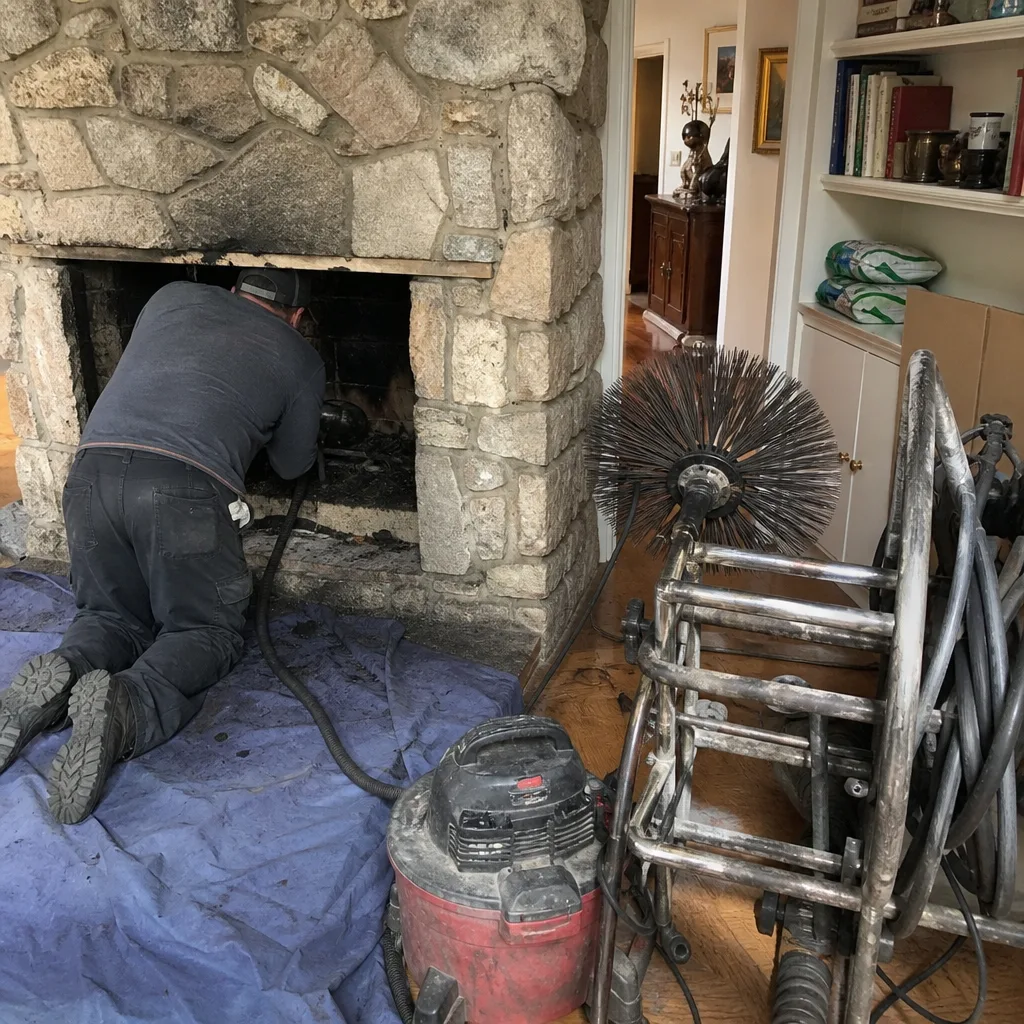 Before
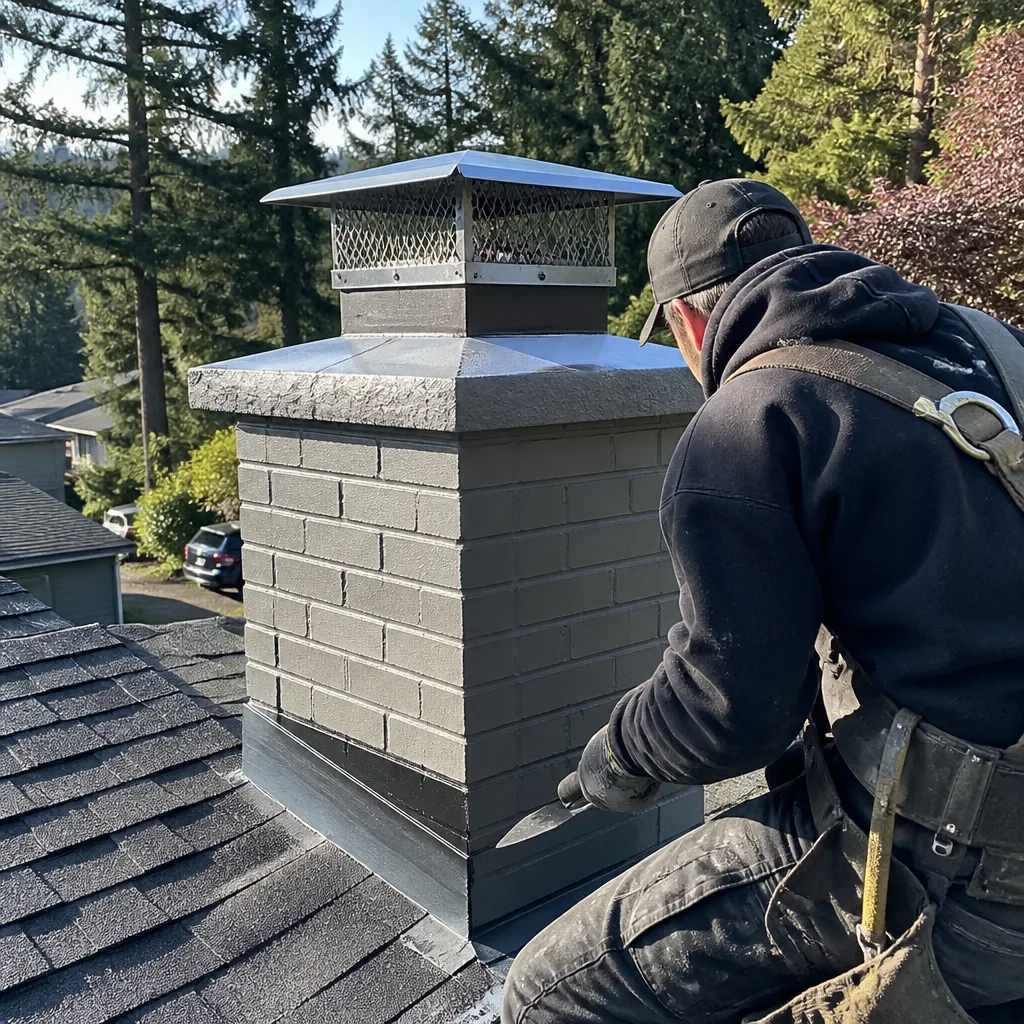 After
AfterThe Complete Guide to Chimney Cleaning in Kirkland
Most chimney guides tell you to schedule annual cleaning. They skip the part where the sweep’s flashlight can’t see the back wall of a Kirkland clay-tile liner, and where creosote stage matters more than the calendar date. In our experience across more than 38,000 chimney visits since 2009, the difference between a safe flue and a fire hazard isn’t how recently the chimney was swept - it’s whether the sweep looked with a camera, documented what they found, and matched the cleaning method to the actual creosote stage inside. This guide maps the full sequence from initial camera scan to written clearance record, specifically for Kirkland homes burning through our wet, six-month heating season. For more guides & resources, see our blog.
Quick Answer
Chimney cleaning in Kirkland typically costs $199-$349 for a standard sweep with NFPA 211 Level 2 camera inspection included. A thorough job takes 60-90 minutes, documents the flue condition with photos before and after, and delivers a written clearance record. In Kirkland’s wet-burn climate, glazed creosote (stage 2) develops faster than in drier regions, making camera verification essential to determine whether standard brushing or mechanical removal is required.
Table of Contents
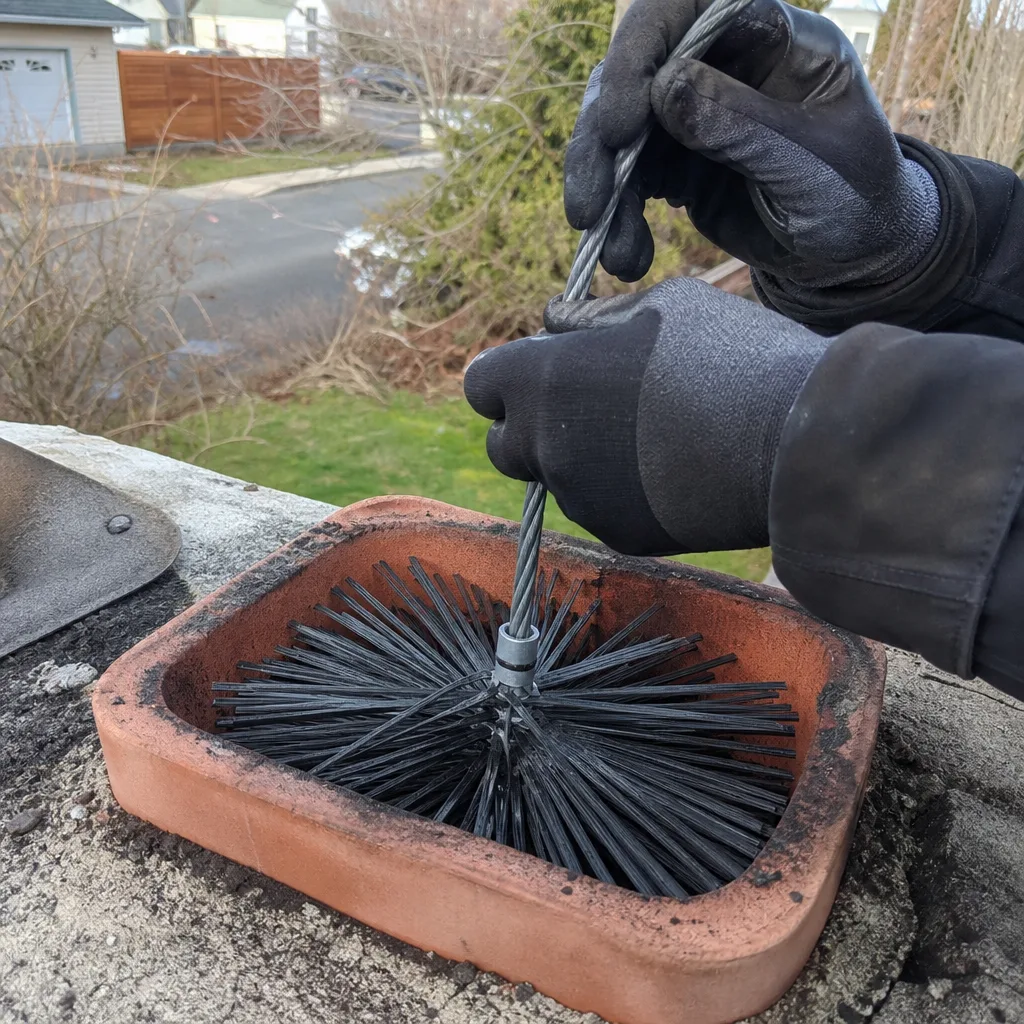
- What a Camera Actually Finds Inside a Kirkland Flue
- The NFPA 211 Level 2 Standard Explained
- Why Kirkland’s Wet-Burn Season Changes Everything
- How to Read a Chimney Sweep Quote in Kirkland
- The Documentation Chain: Why Insurance Adjusters Ask for It
- Common Kirkland-Specific Findings and Next Steps
- What Chimney Cleaning Costs in Kirkland
- Common Mistakes to Avoid
- When to Call a Professional
- Frequently Asked Questions
 Before
 After
AfterWhat a Camera Actually Finds Inside a Kirkland Flue
A flashlight aimed up a flue illuminates roughly the first third of what a camera sees. In Kirkland homes built between 1960 and 1995 - the bulk of our housing stock - clay-tile liners often shift, crack, or develop thin spots that flashlight sweeps miss entirely. The camera doesn’t guess. It records.
Here’s what we’re looking for when we send the camera down:
- Creosote stage and thickness. Stage 1 is dry, sooty, and brushes off. Stage 2 is glazed, hard, and requires a rotary chain or chemical treatment before brushing. Stage 3 is tar-like, often requiring complete removal and potential liner replacement. The camera shows us which stage lives on which section of flue - it’s rarely uniform.
- Liner integrity. Clay tiles crack from thermal shock, especially in Kirkland where temperature swings of 30°F in a single winter day are common. A hairline crack at the flue’s back wall, invisible from below, is where combustion gases escape into the chimney structure.
- Mortar joint condition. Between clay tiles, mortar erodes. In Kirkland’s damp climate, moss and freeze-thaw cycles accelerate this. Missing mortar creates gaps where creosote accumulates and where heat transfers to combustible framing.
- Smoke chamber profile. The area above the firebox and below the flue throat should slope smoothly. Corbelled brick or rough parging here creates turbulence that deposits creosote and reduces draft.
- Obstructions. Bird nests in spring, leaf debris from overhanging Bigleaf maples in fall, and collapsed liner sections year-round. The camera finds them before a brush jams against them.
We document every finding with timestamped photos. Clause 4 of the Haven Standard requires this photo record on every job - not as an upsell, but as the baseline practice we’ve run since 2009. When a Kirkland homeowner asks six months later what their flue looked like, we pull the archive. When their insurance company asks for evidence of maintenance, the documentation chain is already complete.
The NFPA 211 Level 2 Standard Explained
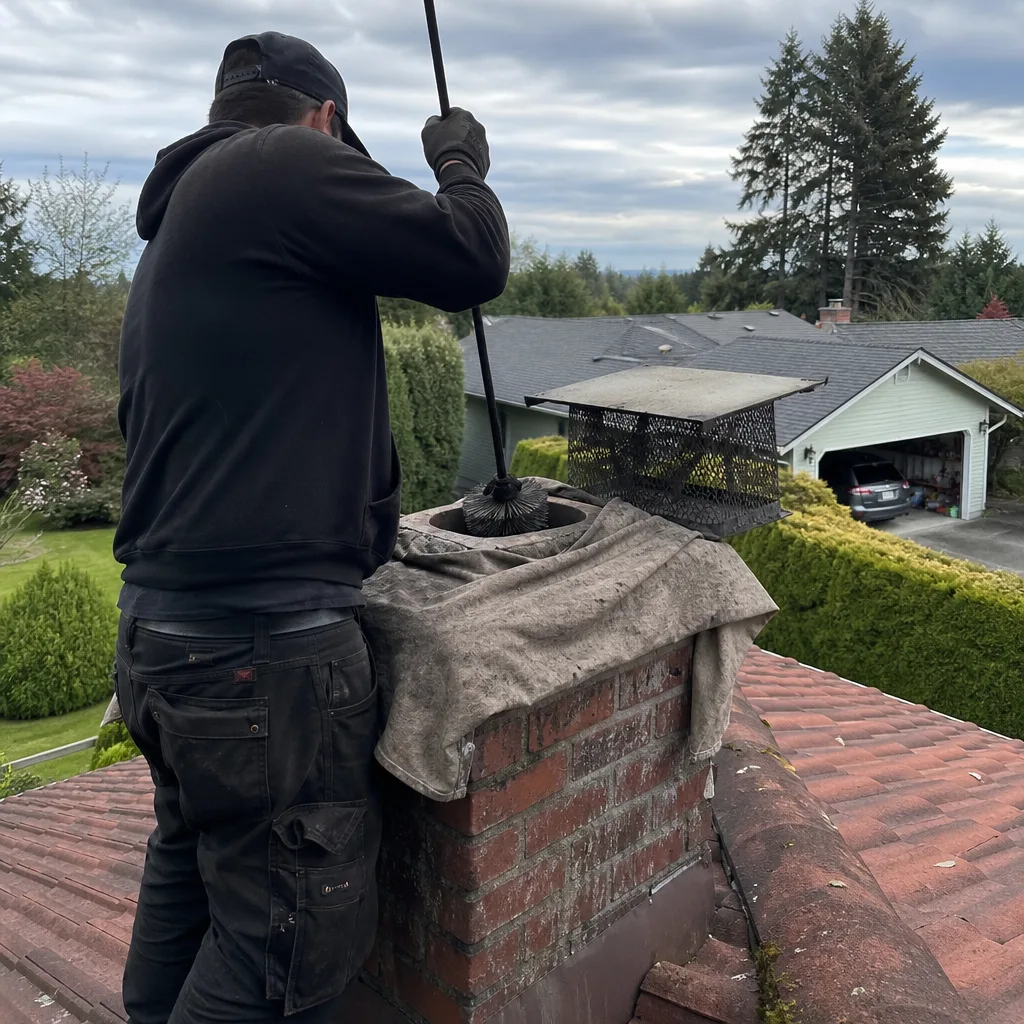
NFPA 211 is the National Fire Protection Association’s standard for chimneys, fireplaces, vents, and solid fuel-burning appliances. Within that standard, three inspection levels exist. Most Kirkland homeowners have received Level 1 inspections without knowing it - a visual check of readily accessible portions, typically performed during a routine sweep.
Level 2 is different. It’s the inspection standard required by NFPA 211 when:
- A property changes hands (relevant for Kirkland’s active 2015-2025 resale market)
- Any fuel type changes, or an appliance is replaced
- After a chimney fire, earthquake, or significant weather event
- Upon the first inspection of a new customer relationship
What Level 2 actually requires: accessible portions of the chimney exterior and interior, including attics, crawl spaces, and basements; a camera scan of the flue interior; and a written report of findings. The standard does not specify photo documentation, but Clause 4 of the Haven Standard does - we’ve required it since 2009, before insurers or regulators asked.
What a verbal “looks good” misses: the NFPA 211 standard explicitly calls for written documentation. A sweep who tells you everything’s fine without a written report hasn’t performed a Level 2 inspection, regardless of what they charged. In Kirkland, where home sales often trigger inspection requirements, a verbal clearance won’t satisfy a buyer’s insurance underwriter or a seller’s disclosure obligation.
Our Level 2 process runs like this: technician arrives in uniform with license number visible; camera scan of the full flue length; photo record uploaded to the job file; written findings delivered before any cleaning or repair work is proposed; written price for recommended work; signed authorization before work begins. This sequence is Haven Standard Clause 1 - “Have it in writing” - and it’s non-negotiable on every visit.
Why Kirkland’s Wet-Burn Season Changes Everything
Kirkland’s heating season runs roughly October through March, with shoulder months that push effective burn time to seven or eight months. Seasonal care matters in our maritime climate, where high ambient humidity, frequent rain, and temperatures that hover in the 40s and 50s for long stretches create unique demands. These conditions create what sweeps call a “wet burn” environment.
In a wet burn, fire-starting temperatures are harder to reach because the firebox, flue, and fuel absorb atmospheric moisture. Homeowners tend to build smaller, smoldering fires to compensate. Smoldering burns produce more incomplete combustion, which produces more creosote. And that creosote arrives at the flue wall cooler and stickier than in dry climates, where hotter, faster burns convert more hydrocarbons to heat and less to deposits.
The result: Kirkland flues develop stage-2 glazed creosote faster than identical appliances in drier Eastern Washington or interior climates. We’ve measured this directly. In our records, Kirkland homes burning cordwood on a 3-4 day per week schedule typically show stage-2 glazing at 18-24 months post-sweep. In drier climates, that interval extends to 30-36 months.
Stage-2 creosote looks shiny, feels hard, and resists standard polypropylene brushes. Sending a brush through it without pretreatment polishes the surface without removing mass. The camera distinguishes stage-2 glazing from stage-1 soot by reflectivity and color density - stage-2 shows amber to black glassy patches where stage-1 reads as matte gray or brown. This distinction determines whether we proceed with standard sweeping, apply a chemical modifier like ACS or Poultice Creosote Remover and return 48 hours later, or deploy rotary chains for mechanical removal.
Skipping this stage identification is how chimneys catch fire. Stage-2 creosote has a lower ignition temperature than stage-1 and burns with more intensity once lit. Kirkland’s wet-burn environment doesn’t reduce fire risk; it changes the timeline and the required response.
How to Read a Chimney Sweep Quote in Kirkland
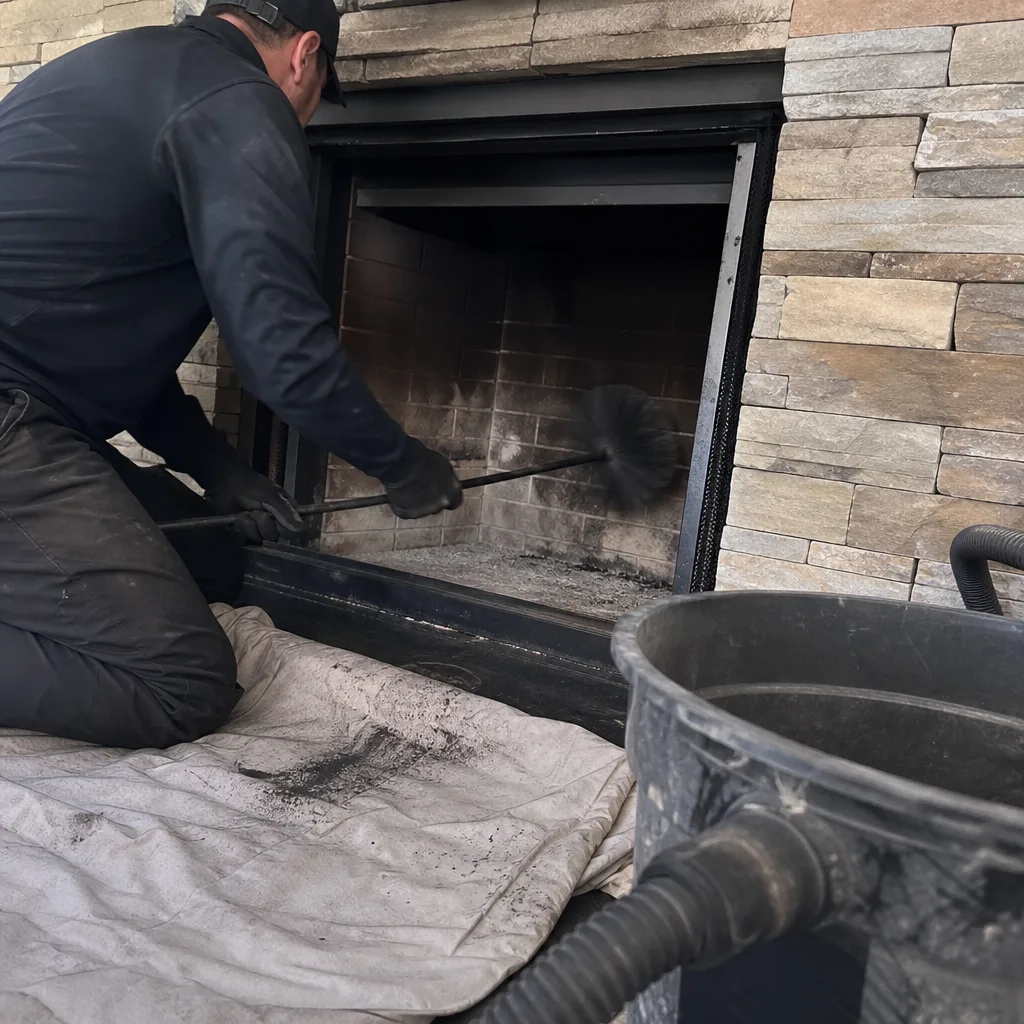
Not every quote that says “chimney cleaning” describes the same service. In Kirkland, we’ve reviewed competitor quotes that range from $89 to $450 for nominally identical work. The difference is in what the technician actually does, documents, and guarantees.
Here’s how to read the line items:
| Line Item | What It Signals | Red Flag If Missing |
|---|---|---|
| NFPA 211 Level 2 Inspection | Camera scan of full flue, written report | “Visual inspection” or no inspection mentioned |
| Photo Documentation | Before/after images, archived record | No mention of photos or “upon request” upsell |
| Creosote Stage Assessment | Determines cleaning method before brushing starts | Flat “sweep” price regardless of findings |
| Smoke Chamber Evaluation | Checks corbelling, parging, clearance to combustibles | Flue-only focus, firebox ignored |
| Exterior/Crown Condition | Moss, spalling, mortar erosion common in Kirkland | Interior-only service |
| Written Clearance Record | Documented proof of maintenance for insurance | Verbal “all clear” only |
| Warranty or Guarantee | Recourse if problems emerge post-service | No warranty mentioned |
A quote that lists only “chimney sweep - $149” tells you almost nothing. A quote that breaks out inspection level, documentation type, cleaning method contingent on creosote stage, and warranty terms tells you the company has a process. At Level Two Chimney Kirkland, our written quotes specify each element before work begins - Haven Standard Clause 1. We’ve never believed in “call for pricing” because the price should reflect what we actually find, and what we find requires looking first.
Watch for these specific Kirkland market patterns: some companies price low to book the appointment, then discover “unexpected” stage-2 creosote that requires a surcharge. Our practice is to quote the inspection and assessment first, then present a revised written price if mechanical removal or chemical treatment changes the scope. The initial camera scan determines the actual need; we don’t invent findings to inflate invoices. Our Free Second Opinion on any written estimate - bring us a competitor’s quote - exists precisely because this practice is common enough to warrant it.
The Documentation Chain: Why Insurance Adjusters Ask for It
After a chimney fire, insurance adjusters request specific documentation. They don’t want to know that a sweep visited. They want proof of what was found, what was done, and what condition remained. The sequence matters.
The complete documentation chain runs:
- Pre-cleaning photo record. Timestamped images showing creosote stage, liner condition, any defects. This establishes baseline condition and proves the sweep actually looked before cleaning.
- Cleaning log. Method used (standard brush, rotary chain, chemical pretreatment), time spent, technician name, and any anomalies encountered. This connects the work performed to the condition documented.
- Post-cleaning photo record. Verification that identified deposits were removed, liner integrity visible, and no new damage created during cleaning. This is where underqualified sweeps often fail - aggressive rotary chains can crack aged clay tiles, and without after photos, that damage is attributed to the fire.
- Written clearance record. A formal statement that the chimney, based on Level 2 inspection and documented cleaning, is suitable for use under stated conditions. This is what insurers file.
Clause 4 of the Haven Standard has required this full chain since 2009. We’ve delivered it on every one of our 38,000-plus visits. When a Kirkland homeowner in the Highlands neighborhood experienced a chimney fire in 2022, their insurer initially denied the claim for lack of maintenance documentation. We produced the complete chain from their 2021 service - pre-cleaning photos showing stage-2 creosote, cleaning log with chemical pretreatment notation, post-cleaning verification, and written clearance. The claim was reinstated.
Without this chain, a sweep’s visit is a receipt, not a record. Receipts don’t satisfy adjusters. Records do.
Common Kirkland-Specific Findings and Next Steps
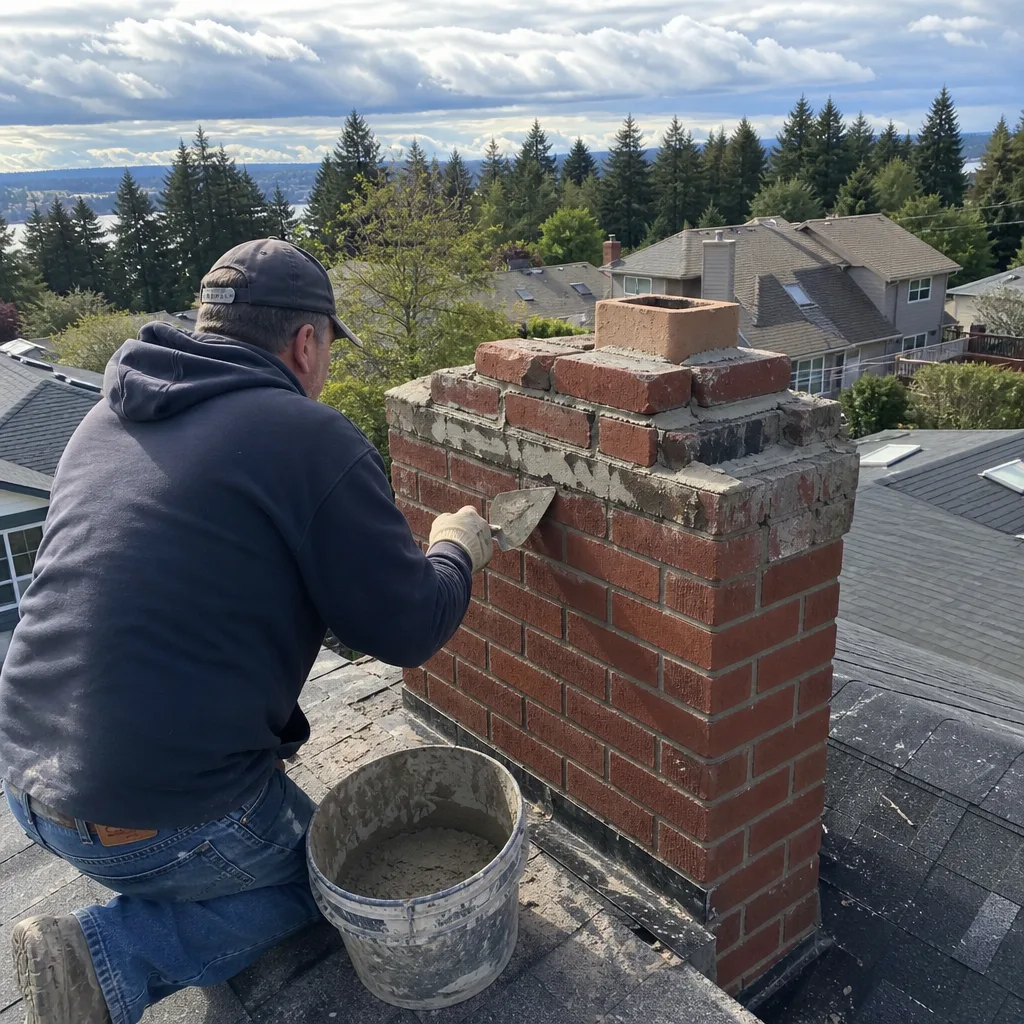
Kirkland’s housing stock, climate, and topography produce predictable patterns. Here are the findings we encounter most often, what triggers them, and what each requires:
Moss-accelerated mortar erosion at the crown. Kirkland’s western exposure, especially in neighborhoods like Juanita and Finn Hill, catches persistent moisture from Puget Sound airflow. Moss colonizes crown mortar, holds water against the surface, and accelerates freeze-thaw spalling. We document crown condition in every exterior photo set. Minor erosion receives crown sealant (we use HeatShield or Gelco formulations matched to the existing crown material). Advanced spalling requires crown rebuild or, if the damage extends to brick courses, partial chimney reconstruction.
Offset flues in older Craftsman homes. Pre-1940 homes in Kirkland’s Norkirk and Market Street districts often have unlined brick flues with intentional offsets - horizontal shifts built into the chimney to navigate rooflines. These offsets trap creosote and resist standard brushing. Camera identification is essential; we mark offset locations and deploy flexible rods with directional brushes, or recommend stainless steel liner installation if the offset creates persistent maintenance problems. Chimney repair in Kirkland often begins with this finding.
Gas insert liner gaps. Kirkland’s 1980s-2000s homes frequently have factory-built fireplaces later fitted with gas inserts. The insert’s smaller flue collar often connects to the existing chimney with a flexible liner that doesn’t extend full flue length, or with a direct-vent termination that bypasses the chimney entirely but leaves the original flue open to moisture and vermin. We check for liner continuity, proper termination, and whether the original flue requires cap installation or complete closure. Fireplace services in Kirkland include insert evaluation and proper venting configuration.
Thermal shock cracking in south-facing flues. Chimneys on Kirkland’s south exposures experience rapid temperature cycling - cold nights, sudden morning sun, hot evening fires. Clay tiles crack more frequently than on north exposures. The camera finds these; the written report specifies whether cracks are hairline (monitor annually), through-wall (repair or reline), or displaced (immediate cessation of use).
Downslope moisture intrusion. Homes on Kirkland’s east-facing slopes, toward Lake Washington, receive driven rain that penetrates deteriorated flashing or crown cracks. We inspect for water staining on smoke chamber walls, efflorescence (white mineral deposits), and rusted damper assemblies. Each indicates a moisture path that cleaning alone won’t resolve.
What Chimney Cleaning Costs in Kirkland
Chimney cleaning prices in Kirkland reflect the actual service delivered, the documentation included, and the contingency for findings that change scope. Here’s our current pricing structure, which we publish because Haven Standard Clause 1 requires written price before work starts:
| Service | Price Range | What’s Included |
|---|---|---|
| Standard Sweep with Level 2 Inspection | $199-$249 | Camera scan, stage-1 or light stage-2 creosote, photo record, written clearance |
| Heavy Creosote Removal (Stage 2 Glazed) | $279-$349 | Chemical pretreatment or rotary chain, extended cleaning time, full documentation |
| Stage 3 Creosote / Tar Removal | $349-$499 | Mechanical removal, potential liner evaluation, documentation, repair quote if indicated |
| Gas Fireplace Inspection & Cleaning | $159-$199 | Burner assembly, pilot system, venting check, not including flue liner if separate |
| Multi-Flue Property (additional flues) | $129-$179 each | Same documentation standard per flue |
These ranges assume standard access, working appliances, and no active safety hazards. If the camera finds a condition that requires repair before safe use - a detached liner, significant spalling, or combustible clearance violation - we stop, document, and present a separate written repair quote. We do not proceed with cleaning on unsafe systems. This is non-negotiable and protects both the homeowner and our technician.
Materials for any repair work come through our Haven buying network: DuraFlex for stainless liners, HeatShield for crown and smoke chamber repair, Gelco for caps and spark arrestors, Olympia Chimney for specialty components, Famco for termination hardware, and Copperfield for flashing and custom metalwork. Network pricing keeps customer costs transparent - we don’t markup arbitrarily.
Common Mistakes to Avoid
- Booking a sweep that doesn’t use a camera. In Kirkland’s wet-burn environment, stage-2 creosote is common and invisible to flashlight inspection. A brush-only visit without camera verification is guessing.
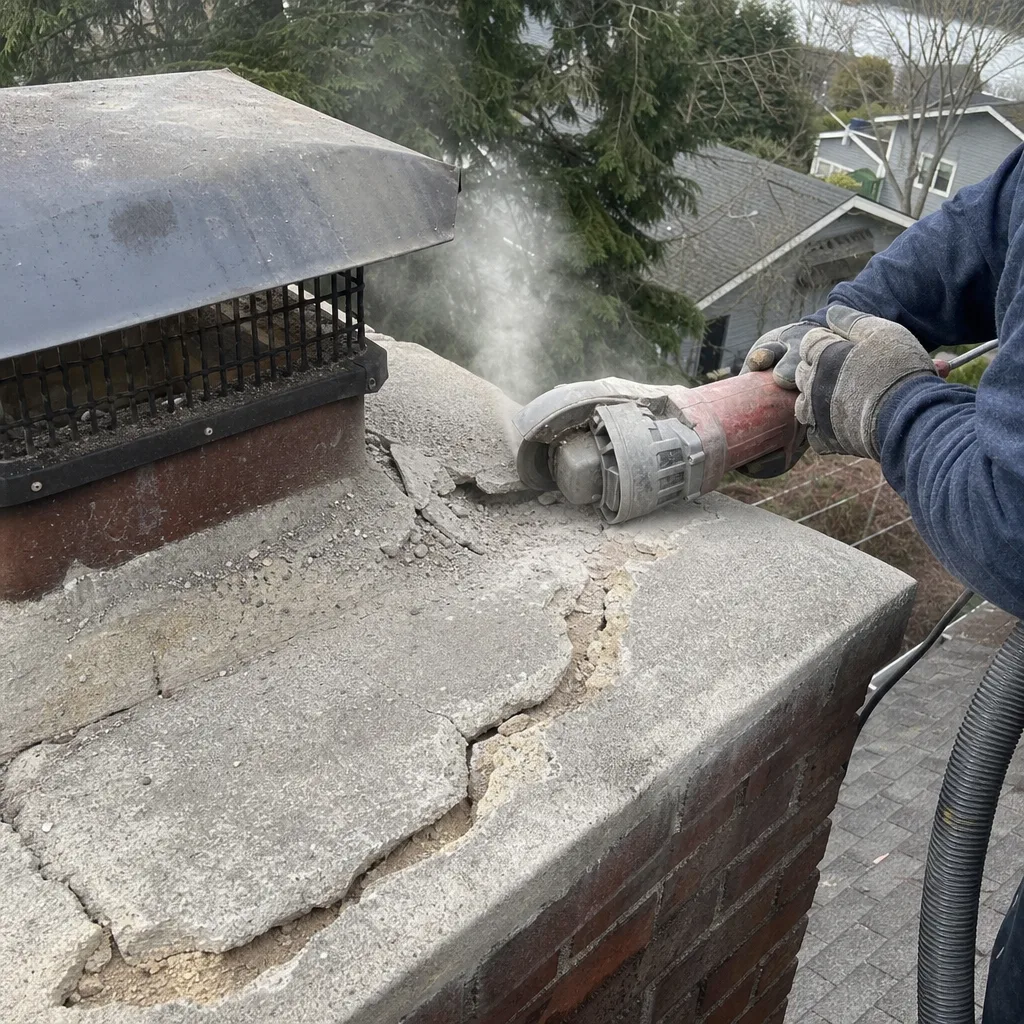
- Ignoring the crown and exterior. Moss and moisture damage progresses faster here than inland. A sweep that never leaves the firebox misses the conditions that destroy chimneys from the top down.
- Accepting verbal clearances. Insurance companies, home inspectors, and buyers all require written documentation. A verbal “all good” has no standing in any dispute.
- Assuming annual cleaning is always necessary. Light-use gas fireplaces may need only biennial inspection. Heavy wood burning in Kirkland’s wet climate may need mid-season evaluation. The camera determines interval, not the calendar.
- Choosing on price alone. The $89 sweep is profitable only through volume and upsell pressure. Proper documentation, trained technicians, and warranty backing cost what they cost.
- Neglecting post-purchase inspection on resale homes. Kirkland’s 2015-2025 buyer cohort often inherits chimneys with unknown maintenance history. A Level 2 inspection at purchase establishes baseline and satisfies disclosure requirements.
- DIY chemical treatments without camera guidance. Creosote modifiers work but require proper application, dwell time, and verification of complete removal. Applied blindly, they can create hazardous conditions or mask problems the camera would have found.
When to Call a Professional
Call for a Level 2 inspection before the burning season starts if you haven’t had documented service in 24 months. Call immediately if you notice: smoke entering the room during operation; a strong, acrid odor from the fireplace when not in use; visible debris or staining on interior walls near the chimney; or any event that could affect structure - earthquake, lightning strike, or nearby tree impact.
For new Kirkland homeowners, call during your first month of occupancy. Finding the right contractor to establish baseline condition and documentation protects your investment and satisfies insurance requirements. For homes with gas inserts installed by previous owners, verify that venting configuration matches current appliance specifications - mismatches are common and potentially dangerous.
Level Two Chimney Kirkland offers free estimates in Kirkland - call (425) 642-3485. Every estimate includes the camera scan and written findings before any work is proposed. Our live phone support runs 24 hours a day, 7 days a week, and we assign named, background-checked, uniformed technicians with license numbers visible. You’ll receive a text when your technician is en route.
Frequently Asked Questions
A standard chimney sweep with NFPA 211 Level 2 camera inspection in Kirkland costs $199-$249. Heavy creosote removal runs $279-$349, and stage-3 tar removal ranges $349-$499. Every price is written and agreed before work begins. Call (425) 642-3485 for an exact quote - estimates are free.
Most wood-burning Kirkland chimneys need inspection every 12-18 months due to our wet-burn climate’s faster creosote accumulation. Light-use gas fireplaces may extend to 24 months. The camera scan determines actual need - we don’t recommend cleaning that isn’t justified by documented condition.
You need a new liner only if the camera finds damage that compromises safety - through-wall cracks, significant spalling, or gaps in a factory-built system - and if repair isn’t feasible. We show you the photos, explain the finding in plain terms, and provide a written repair quote. Nothing is recommended without camera evidence you can see yourself, and we’ll tell you plainly when work can safely wait.
Skipped cleaning allows creosote to accumulate, progressing from stage 1 to stage 2 and potentially stage 3. Stage 2 ignites at lower temperatures and burns more intensely. In Kirkland’s wet-burn environment, this progression happens faster than in drier climates. Chimney fires damage liners, spread to framing through cracked masonry, and can introduce carbon monoxide through compromised flue integrity. The documented inspection tells you where you stand.
Level 1 is a visual check of accessible portions without tools - adequate for annual maintenance on known systems. Level 2 requires camera scan of the full flue, accessible interior spaces, and a written report. Level 2 is required at property sale, appliance change, or after damage. In Kirkland’s market, Level 2 is the appropriate standard for any new customer relationship.
We don’t recommend DIY chimney cleaning for safety reasons. High-tension rotary equipment, roof access, and proper creosote stage identification require training. More importantly, self-cleaning produces no documented record for insurance purposes. If you do perform maintenance yourself, photograph everything and understand that adjusters may still require professional verification. For most Kirkland homeowners, the risk and documentation gap outweigh savings.
The Bottom Line
Chimney cleaning in Kirkland is not a calendar appointment to check off. It’s a documented evaluation of a system operating in a wet-burn climate that accelerates creosote formation and moisture damage. The camera reveals what flashlights miss. The written record satisfies insurers and buyers. The written price before work starts eliminates surprise charges. And the matching of cleaning method to actual creosote stage - not a one-size-fits-all brush routine - is what separates maintenance from theater.
At Level Two Chimney Kirkland, we’ve operated under these principles since 2009, completing more than 38,000 inspections and cleanings with full documentation on every visit. The Haven Standard’s four clauses - written price, verified crews, scheduled arrival, and photo record - aren’t marketing language. They’re the operational rules we follow on every job, including yours.
Call (425) 642-3485 for a free estimate. We’ll send a camera down your flue, show you what we find, and give you a written price before any work begins. That’s Clause 1. It’s how we’ve done it since 2009.
Written by Corrine Halstead, Owner at Level Two Chimney Kirkland, serving Kirkland since 2009.